

Integrated Pest Management for Commercial Food Operations
Food safety standards demand exceptional hygiene at every stage of the modern supply chain. Maintaining high hygiene requires integrated pest management to defend raw materials, production lines, and packaged inventory from biological contamination. A pest infestation threatens consumer safety, invites severe financial penalties, and damages corporate reputations. By shifting operational focus from reactive treatments to proactive environmental suppression, food operations build durable defences against biological vectors. Protecting stock integrity preserves regulatory compliance across all handling facilities.
Commercial food facilities often face stringent audits from bodies like BRCGS and major supermarket brands. Traditional extermination methods no longer satisfy modern regulatory standards or wildlife protection criteria. Facilities need robust protocols that combine physical exclusion, real-time digital monitoring, and staff engagement. How can food processing, logistics, and retail businesses establish an audit-ready strategy that eliminates infestation risks whilst maintaining chemical stewardship?
Key Takeaways
- Integrated pest programmes prioritise physical exclusion and hygienic barriers to prevent infestations before chemical interventions become necessary within food processing facilities.
- Leading food certification schemes like BRCGS and SALSA require detailed trend analysis, clear site mapping, and regular professional biologist inspections.
- Effective rodent control adheres strictly to Campaign for Responsible Rodenticide Use standards, minimising environmental exposure through targeted, non-toxic monitoring tools.
- Comprehensive staff awareness training empowers operational teams to identify early signs of infestation, bridge communication gaps, and maintain rapid internal reporting.
- Real-time digital documentation provides transparent audit trails that satisfy major supermarket specifications, statutory health inspectors, and third-party food quality auditors.
Four Pillars of Food Sector Pest Management
Modern commercial food facilities must implement multi-layered defence systems to protect product integrity. Relying solely on reactive baiting fails audit expectations and creates severe consumer safety risks. A structured approach coordinates preventative site maintenance, continuous biological monitoring, and rapid corrective action across the operational perimeter.
The following matrix outlines the four primary pillars of modern pest governance within food environments. Each operational tier fulfils specific statutory duties, mitigates distinct biological threats, and satisfies third-party auditing requirements. Reviewing these criteria ensures your site establishes appropriate preventative controls across internal operations.
| Strategic Pillar | Operational Purpose | Primary Audit Standard |
|---|---|---|
| Physical Exclusion | Seals ingress points, proofing doors, dock levellers, and vents | BRCGS Section 4.14 |
| Active Monitoring | Tracks insect and rodent activity using non-toxic traps and LED units | ISO 22000 / FSSC 22000 |
| Digital Documentation | Generates live trend analysis, treatment reports, and action logs | Retailer Codes of Practice |
| Staff Education | Delivers pest awareness training to create proactive floor observation | SALSA / Food Safety Culture |
integrated pest management
commercial pest control services
integrated pest management
commercial pest control services
Food Safety Standards and Audit Frameworks
BRCGS Global Standard Compliance Requirements
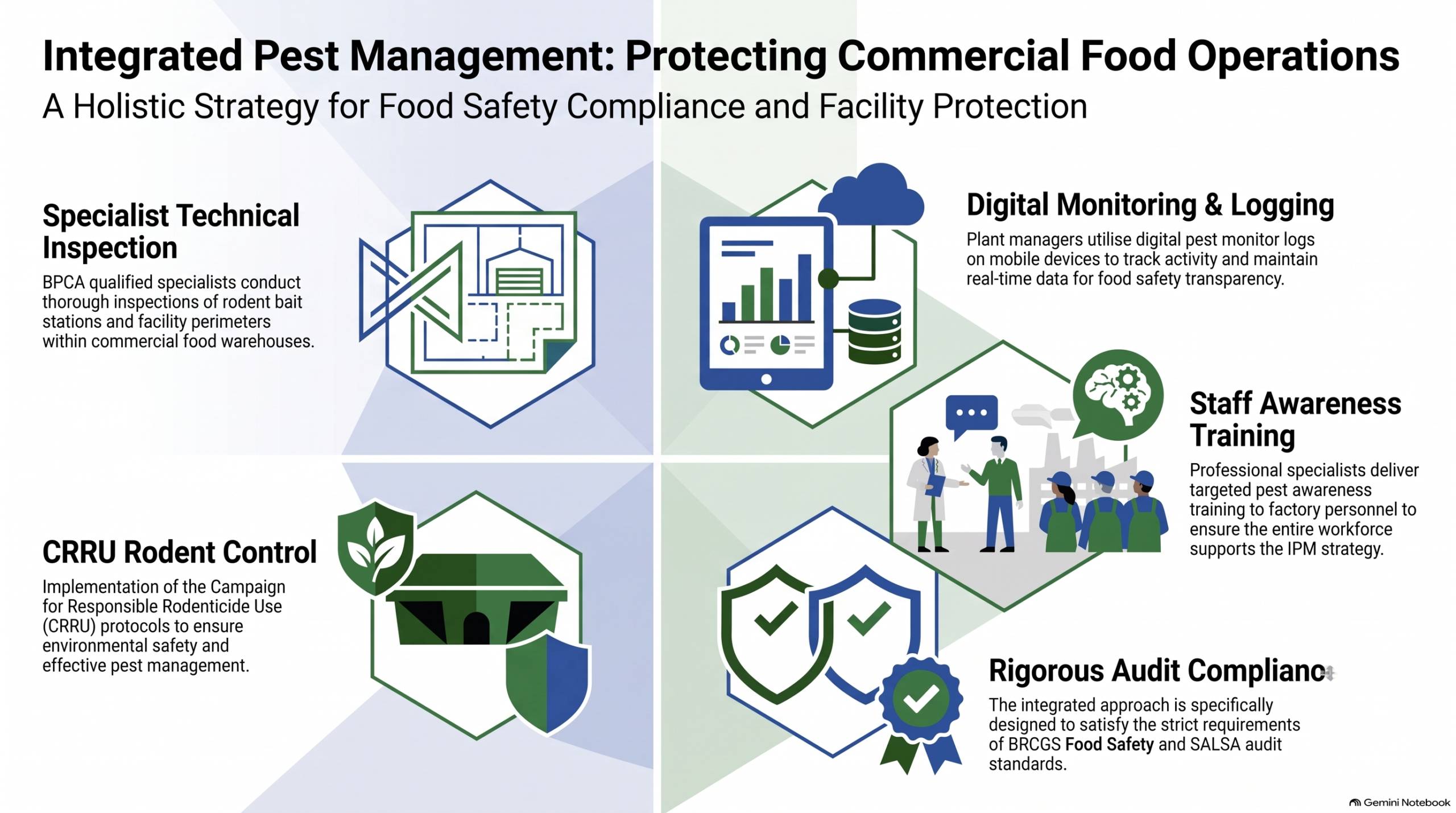
BRCGS Global Standard for Food Safety Issue 9 mandates proactive pest management systems. Facilities must retain professional pest control records, comprehensive site maps, and completed biologist inspection reports. Operators must also demonstrate clear corrective action logs for any detected ingress. These rigorous controls prevent physical contamination within manufacturing zones.
Under BRCGS Section 4.14, food businesses cannot simply rely on periodic contractor visits. Auditors scrutinise inspection frequencies, bait box locations, and trending analyses to confirm active risk suppression. In practice, we find the corrective action log attracts the closest scrutiny. Contracted technicians must possess verified British Pest Control Association qualifications. Sites must also conduct formal reviews alongside independent field biologists.
SALSA Certification and Supermarket Specifications
Small and medium food producers regularly seek SALSA accreditation to secure commercial contracts. Major supermarket chains enforce strict technical standards that exceed baseline statutory regulations. Retailer specifications require nominated internal personnel to manage pest controls. Facilities must maintain rapid technician response protocols to prevent pest activity from reaching product distribution lines.
The Tesco food manufacturing specification dictates that an appointed company employee manages the on-site pest control programme directly. Retailers prohibit permanent toxic baiting within production and packaging zones. That restriction pushes operations towards non-toxic monitoring. Meeting these expectations protects the producer from immediate commercial disqualification during unannounced buyer audits.
Primary Hazard Identification Across Food Facilities
Rodent Pressures in Storage and Processing Zones
Brown rats and house mice represent severe contamination threats within commercial food operations. These rodents gnaw through electrical wiring, structural insulation, and packaging materials to reach warm ingredients. Their droppings, urine, and shedding hairs carry dangerous pathogens like Salmonella. This contamination creates immediate health hazards and forces costly product write-offs.
Rodents require minimal clearance to infiltrate buildings. A juvenile mouse can pass through an opening as small as six millimetres. In dry goods stores, pallets stacked directly against exterior walls create concealed routes where nesting occurs undetected. Early visual evidence prevents localised activity from escalating into full facility infestation. Key indicators include grease rub marks along skirting boards and chewed pallet corners.
Flying and Stored Product Insect Infiltration
Flying insects and stored product insects inflict immense damage across raw ingredient warehouses. Species such as flour beetles, grain weevils, and blowflies contaminate bulk materials with larvae, webbing, and dead bodies. Facilities must detect these infestations early to prevent foreign body complaints, product recalls, and expensive machinery downtime.
Stored product insects often arrive via incoming grain, spice, or flour shipments. They remain concealed inside packaging until populations spike. In food preparation zones, common houseflies and fruit flies spread pathogens across clean prep surfaces. Professional commercial pest control services address these threats through targeted pheromone traps, specialist catch analysis, and rigorous ingredient screening protocols.
Did You Know?
Under the Food Safety Act 1990 and The Food Hygiene (England) Regulations 2013, food businesses that fail to implement adequate pest control procedures face immediate premises closure, unlimited fines, and up to two years of imprisonment for responsible directors.
Preventative Proofing and Environmental Exclusion
Structural Ingress Defence and Door Seals
Physical proofing serves as the primary barrier against pest entry in commercial facilities. Installing heavy-duty brush strips, metal kick plates, and rubber gaskets eliminates gaps beneath external pedestrian and roller shutter doors. Maintaining these barriers prevents mice, rats, and crawling insects from accessing clean production and packaging areas.
Loading docks present severe vulnerability due to frequent transit traffic. From experience across the sector, dock levellers fail proofing checks more often than any other feature. Gaps around them must feature bristle strip seals and chain-link mesh. Wall penetrations for refrigeration pipes, drainage conduits, and electrical feeds require rodent-resistant compounds or stainless steel mesh. Regular engineering audits confirm these barriers withstand daily operational vibrations.
External Perimeter Sanitation and Waste Management
External site hygiene directly influences pest attraction around food distribution centres. Refuse storage areas, organic waste compactors, and recycling bins provide foraging opportunities if improperly maintained. A clean gravel perimeter around buildings discourages rodent burrowing. It also enables technicians to identify tracks and structural damage quickly.
Vegetation around the facility must remain trimmed to prevent natural harbourage and concealment for vermin. Pallet storage yards must adhere to strict separation distances, positioned away from exterior walls with clear inspection corridors. Spillages of raw grains, sugar, or liquids require immediate vacuum cleanup. Leaving food residues overnight creates scent trails that draw wildlife across hundreds of metres.
Commercial Pest Control
We provide comprehensive pest management solutions tailored to protect your business and reputation.
Site Visit and Consultation
We will visit your premises, assess your situation, provide advice, make recommendations and provide a quote.
Digital Monitoring and Electronic Reporting Systems
Real-Time Digital Trending and Audit Trails
Modern pest management relies on cloud-based reporting platforms to track site compliance. Qualified technicians record findings directly into handheld portals during inspections, generating instant action logs for maintenance teams. These digital registers establish transparent audit trails. They track capture trends and satisfy the strict due diligence requirements of food safety auditors.
Paper logbooks carry significant risks of loss, incomplete records, or delayed responses. Digital systems allow quality managers to review open proofing actions, site layouts, and field biologist reports within seconds. Trend graphs demonstrate whether pest counts are rising or falling across specific production zones. This clarity allows managers to target resources before minor incursions breach hygiene thresholds.
Insect Light Traps and LED Catch Analysis
Electronic fly killers provide continuous airborne insect monitoring throughout food processing halls. Modern systems deploy energy-efficient UV LED technology paired with adhesive glue boards to capture insects without fragmentation. Technicians conduct regular count and species analyses on these boards, identifying sanitation gaps and seasonal migration patterns within the building.
Traditional high-voltage grid units pose contamination risks because electrocuted insect fragments can blow into open food lines. Modern glueboard units eliminate this blowout hazard. They also reduce energy consumption significantly compared to fluorescent units. Catch data provides crucial biological evidence for food safety audits. It demonstrates whether intercepted flies originated inside the factory or entered through loading bays.
Audit Compliance
Our specialised services ensure your pest control measures meet rigorous industry compliance standards & certifications.
Pest Management Technology
Shield Pest Management utilises Insectram Ai, the UK’s premier real time integrated pest management system.
Sustainable Control and Chemical Stewardship
Non-Toxic Monitoring and Mechanical Trapping
Sustainable pest management requires operations to replace routine chemical baiting with non-toxic detection methods. Internal zones deploy mechanical snap traps, pheromone lures, and non-toxic monitoring blocks. These devices detect vermin quickly without introducing rodenticides near food surfaces. This preventative protocol eliminates poisoning hazards whilst fully protecting food contact equipment.
Auditors penalise facilities that maintain permanent rodenticide baits inside buildings without active infestations. Non-toxic monitoring blocks contain inert, palatable ingredients that show distinct gnaw marks when rodents sample them. Once technicians confirm genuine rodent activity, they execute short, targeted mechanical trapping or localised baiting regimes. When operating in high-care zones, we remove chemical residues immediately after eradicating the threat.
CRRU Code Compliance and Environmental Stewardship
Responsible commercial operators comply strictly with the Campaign for Responsible Rodenticide Use guidelines. The CRRU code mandates that technicians deploy anticoagulant rodenticides only when non-chemical methods fail to contain active infestations. Adhering to these principles protects non-target predatory wildlife, such as barn owls and kestrels, from secondary rodenticide toxicity.
Food businesses must maintain detailed pesticide usage records. These cover bait formulations, bait box locations, application dates, and disposal manifests. Permanent external baiting is prohibited under CRRU rules unless an environmental risk assessment confirms continuous reinvasion pressures. Technicians inspect external perimeter bait stations regularly. They recover rodent carcasses promptly to prevent scavenger ingestion and environmental contamination.
integrated pest management
pest awareness training
integrated pest management
pest awareness training
Pest Awareness Training
We provide pest awareness training as an essential component of quality assurance and regulatory compliance.
Domestic Pest Control
Our expert technicians eliminate household pests quickly and safely, ensuring your home remains pest-free.
Workforce Education and Human Defence Lines
Structured Pest Awareness Training Courses
Engaged production workers provide the earliest defence against vermin in food manufacturing facilities. Delivering structured pest awareness training ensures staff recognise pest biology, signs of gnawing, droppings, and insect larvae. Suitably educated employees understand why basic hygiene and structural proofing remain vital to commercial food safety compliance.
Major retailer audits inspect training registers closely. Auditors confirm that machine operators, warehouse staff, and hygiene teams receive verified pest instruction. Courses covering UK pest legislation, audit compliance standards, and species identification conclude with written assessments. Formal training certificates prove to visiting auditors that on-site personnel actively safeguard production zones. That evidence shows the facility does not treat pest control as an external duty alone.
Internal Escalation and Reporting Protocols
Swift internal reporting processes bridge the gap between contractor visits and daily operations. Food facilities must maintain visible sighting logs where floor workers immediately record any suspected pest activity. Clear escalation pathways ensure that nominated site supervisors notify professional pest technicians before minor incursions turn into established infestations.
When an operator spots a moth, fly cluster, or rodent dropping, the incident must trigger an immediate sequence of actions. Staff record the exact location, time, and nature of the sighting. The designated food safety manager inspects the area, isolates vulnerable raw materials, and contacts the servicing technician. Documenting this complete sequence demonstrates proactive due diligence during external retailer reviews.
Supply Chain Logistics and External Transport Vectors
Inbound Consignment Inspection Protocols
Pests frequently enter food factories hidden inside raw material deliveries and wooden pallets. Inbound intake teams must inspect every consignment before moving stock into storage warehouses. Technicians train logistics staff to examine pallet bases for insect webbing, rodent gnaw marks, and beetle frass before accepting goods.
Cross-docking facilities and distribution centres experience high turnover. That makes them prime vectors for stored product insects. Incoming dry goods like flour, grain, and dried fruits require quarantine areas if packaging appears damaged. Rejecting contaminated shipments at the goods-in bay protects the entire warehouse inventory from cross-infestation. This proactive protocol prevents massive disposal costs and production shutdowns.
Vehicle Sanitation and Loading Bay Defences
Commercial haulage vehicles and curtain-sided trailers can transport pests across long distribution routes. Transport managers must enforce rigorous vehicle cleaning regimes between loads to eliminate food spills and nesting debris. Loading bays require heavy-duty PVC strip curtains and rapid-rise doors to prevent airborne insects entering during turnaround operations.
Refrigerated transport units must maintain intact door seals. Rodents otherwise climb into cargo bays during overnight depot stops. Drivers must verify that cargo spaces are clean and dry prior to loading packaged foodstuffs. Exterior bird deterrent spikes and netting above loading canopies prevent feral pigeons from roosting. That exclusion reduces the hazard of droppings falling onto open vehicle beds.
Final Thoughts
Operating a compliant food facility requires an unwavering commitment to integrated pest management across every operational tier. Relying on sporadic reactive treatments leaves businesses vulnerable to regulatory prosecution, audit failures, and commercial contract cancellations. Success demands coordinated physical proofing, non-toxic biological monitoring, and transparent digital documentation that satisfies strict retail standards.
Strengthening internal defences begins by treating pest management as a continuous operational culture. It is not an isolated contractor function. Equipping staff with proper pest awareness training transforms floor workers into vigilant biological inspectors. Sustainable exclusion methods and disciplined logistics checks build genuine supply chain resilience, protecting both brand reputation and consumer health.
Make an Enquiry
integrated pest management
commercial pest control services
integrated pest management
commercial pest control services
Frequently Asked Questions
A:
Traditional pest control historically relied on calendar-based chemical applications and reactive extermination after infestations occurred. In contrast, integrated pest management prioritises environmental exclusion, strict sanitation, and continuous biological monitoring. Chemical treatments serve as a controlled last resort rather than a primary tool. This methodology eliminates risks of product contamination, avoids unnecessary rodenticide use, and complies with modern food auditing frameworks like BRCGS and SALSA.
A:
Commercial pest technicians working in UK food environments should hold British Pest Control Association or Royal Society for Public Health Level 2 qualifications in pest management. Technicians should also be registered with BASIS PROMPT, demonstrating active continuous professional development. For complex manufacturing and packaging plants, companies should also engage qualified field biologists. These specialists perform advanced bi-annual audits, detailed trend analyses, and independent risk reviews.
A:
Food safety standards like BRCGS Issue 9 and ISO 22000 strictly prohibit permanent toxic rodenticide baiting inside food handling facilities. Loose or block rodenticides create severe risks of accidental toxic contamination if dragged onto production lines or packaging materials. Poisoned rodents may also die in inaccessible machinery voids, causing foul odours, fly infestations, and foreign body hazards. Facilities must use non-toxic monitoring blocks and mechanical traps indoors.
A:
A compliant pest awareness course covers major pest biology, signs of rodent and insect activity, relevant UK food safety legislation, and audit requirements. Training instructs staff on why rigorous housekeeping, waste management, and physical proofing prevent infestations. Modules also detail proper reporting protocols and sighting log maintenance. Completing this training ensures workers understand their responsibilities and helps facilities meet retailer standards, such as the Tesco pest control specification.
A:
Inspection frequency depends on the specific facility risk assessment, product vulnerability, and audit standards. Most commercial food manufacturing facilities require at least eight to twelve routine technical inspections per year, with high-risk sites receiving monthly visits. In addition to standard technician checks, food standards like BRCGS require independent field biologist inspections at least twice annually. Electronic reporting systems maintain complete visit logs to prove continuous due diligence.


By choosing Shield Pest Management, you’re partnering with a company that combines local expertise with industry-leading practices. Our commitment to quality, compliance, and customer satisfaction makes us an ideal choice for both residential and commercial pest control needs.
