
Commercial Pest Control
BPCA-qualified technicians, field biologist oversight and audit-ready documentation from the first visit. Shield has protected commercial sites in Yorkshire and the North of England since 2002.
At a Glance
Commercial pest control is a contracted programme of survey, prevention, monitoring and proportionate treatment that keeps a business free of rodents, insects and birds and produces the documentary evidence its auditors require. Shield delivers this under BPCA Codes of Best Practice, with field biologist oversight, digital reporting through Insectram, and documentation mapped to BRCGS, SALSA, Red Tractor, AIB, ISO 22000 and FSSC 22000.
What’s Included
One programme, one accountable team, and one evidence trail your auditor can follow from survey to close-out.

A visit frequency set by risk, not by a price list. Every visit is logged, timed and signed, with the report uploaded before the technician leaves site.
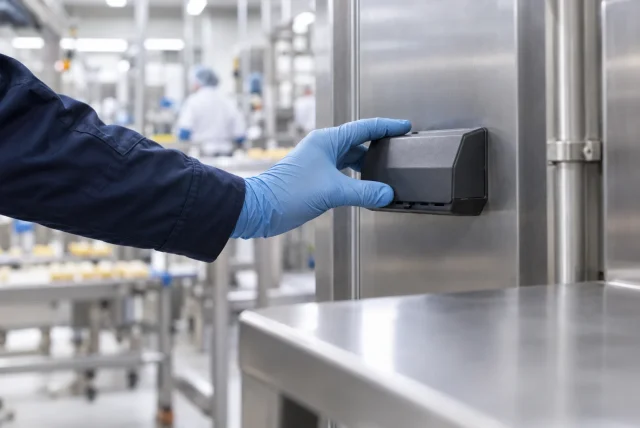
QR-coded monitoring points, electronic fly killers and insect monitors, each tied to a named location so catch data can be traced and trended.

Entry points, harbourage and attractants identified and closed — loading bays, drainage, roof voids, door seals and external perimeter.

24-hour call-out for active infestations, seven days a week, with the same technicians who know your site and your standard.
Sectors We Serve
Different sectors face different pest pressures and different standards. Shield’s contracts are designed sector by sector.

The highest pest control scrutiny of any UK sector. Documented, risk-assessed programmes that satisfy BRCGS Issue 9, HACCP and retailer specifications.

Large open volumes and constant goods movement. Perimeter rodent control, loading bay fly management, bird proofing and digital reporting.

Programmes designed around continuous production and strict zoning, producing the evidence ISO 22000 and FSSC 22000 require.

Discreet, scheduled fly control, rodent prevention and bird proofing for hotels, restaurants, pubs and contract caterers.

Lowest-toxicity options and documentation ready for CQC, Ofsted and local authority inspection, with £10m public liability.

Low-visibility servicing outside trading hours, with multi-site portal reporting for facilities managers.
How It Works
Every contract follows the same sequence, and every step produces a record your auditor can inspect.
A field biologist walks the site, maps risk by zone and identifies the pressures specific to your building and your process.
A written pest control risk assessment sets monitoring density, visit frequency and the controls each zone justifies.
Entry points and harbourage are closed first. Prevention is cheaper than treatment and auditors expect it to lead.
QR-coded points, insect monitors and electronic fly killers record activity continuously between visits.
Intervention only where the risk assessment justifies it, under CRRU and COSHH, by BPCA-qualified technicians.
Every visit reported in Insectram, with trend analysis, corrective actions and photographic close-out.
Documentation
Audit evidence is a by-product of the service, not a scramble the week before the visit.
Every visit, logged and timed
Monitoring point maps by zone
Staff reports captured and closed
Catch data over your audit window
For every product on site
Risk assessments and method statements
RSPH, BPCA and CHAS
Certificates, actives and dosages
Audit Compliance
A single non-conformance can suspend you from a supplier list. Shield specialises in the standards below and the retailer specifications layered on top of them.
AI Pest Management
Site managers, QA leads and external auditors log in 24/7 to see outstanding actions and proofing recommendations, pest activity trending over time, inspection reports with COSHH data and RAMS, site plans and monitoring point maps, and a complete historical evidence trail for any audit window. AI analytics highlight recurring risks and seasonal patterns — while every technical decision stays with your BPCA-qualified technician.

Why Shield
Over twenty years of commercial contracts across food manufacturing, warehousing, hospitality, healthcare and education, including sites feeding major UK retail supply chains.
RSPH Level 2 technicians, CHAS accreditation and BPCA Codes of Best Practice, with a field biologist available for independent inspection.
£10m public liability, CRRU and Think Wildlife signatory, TrustMark member, and a 24-hour emergency response across the North of England.
Client Feedback
“Shield’s commercial pest control service is impressive. Their technicians are professional and thorough, ensuring our warehouse remains pest-free.”
Warehousing
“Shield’s audit compliance support for our BRCGS certification has been invaluable. Their knowledge of the standards has made our audits much more streamlined.”
Food Manufacturing
“We’ve been using Shield’s Insectram reporting system and it has changed how we manage pest control. Real-time updates and trend analysis keep us proactive.”
Multi-site Facilities
A: Frequency follows risk, not habit. Food manufacturing sites are typically serviced every four weeks, warehousing every six to eight, offices quarterly. The risk assessment sets it and the audit standard has to accept it.
A: Price follows site size, zone count, monitoring density and visit frequency. A free site survey gives you a fixed annual figure with no call-out charges for contracted pests.
A: Yes. Documentation is prepared in advance and a field biologist can attend the audit to answer technical questions directly.