
Retail & Offices
Nobody should know we were there. Shield services offices, shops and mixed estates out of hours, handles bird proofing and fouling, and reports every building through one login.
At a Glance
Office and retail pest control is a scheduled programme worked outside trading hours, covering the building fabric, waste areas, catering and welfare facilities, service voids and the roofline.
It combines rodent prevention and proofing, insect monitoring, bird proofing and fouling removal, and discreet response to reported sightings — with dated records and portfolio-level reporting across every building in an estate.
Where the Risk Sits
Commercial buildings rarely have a pest problem of their own. They inherit one from the yard, the neighbour or the fabric.
Bin stores used by several tenants, with nobody holding responsibility for the state of them.
Goods arriving from multiple sources into a room nobody inspects behind.
The single most common source of internal activity in an otherwise clean office.
Shared risers, suspended ceilings and cable routes that connect one tenancy to the next.
Gulls and pigeons nesting on flat roofs, parapets and shopfront canopies, with fouling below.
Town-centre buildings where proofing has to respect the structure and sometimes the consent.
The Programme
Visits scheduled around trading and occupancy, so no technician is on your shop floor or in your open-plan office during the working day.
External control first, then door seals, service penetrations and riser proofing — the routes that let a neighbour’s problem become yours.
Monitoring focused on kitchens, welfare, waste and warm plant, with electronic fly killers where catering justifies them.
Netting, spiking and canopy proofing carried out within the wildlife legislation protecting nesting birds, with fouling clearance and a safe reinstatement.
A documented route for staff to report, and a response that arrives without announcing itself to customers or visitors.
Every building reported the same way, rolled up to estate level, so one facilities manager holds one relationship rather than twelve.
Multi-Site
A single agreement across the portfolio, with per-building risk assessments underneath it rather than one generic document copied out.
The same monitoring standard and the same report shape everywhere, which is the only way a genuine comparison between buildings becomes possible.
Estate-level trend reporting for budget and landlord conversations, with the building-level detail one click underneath.
Our Method
The survey covers the fabric, the waste arrangements, the welfare areas, the risers and the roofline, out of hours.
A field biologist writes the risk assessment and issues a proofing plan that separates what sits with you from what sits with the landlord or the managing agent — which is usually the conversation that has been avoided. Monitoring runs from day one, and the first documented trend review lands at ninety days.

Bird Control
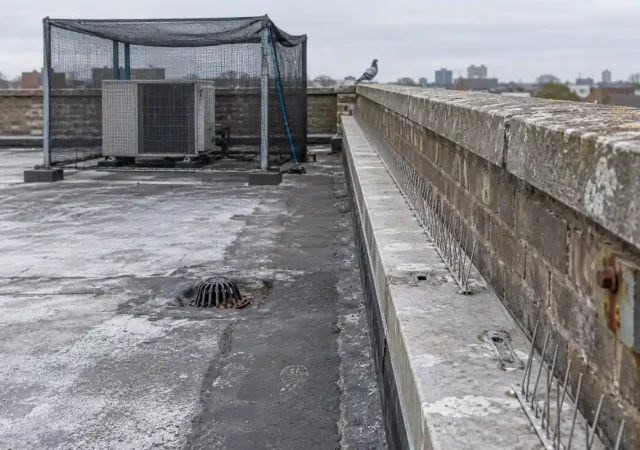
Gulls and pigeons on a flat roof, a parapet or a shopfront canopy create fouling that damages the building, creates a slip risk on the pavement below and does immediate reputational harm to a retail frontage.
Shield surveys the roofline, specifies netting, spiking or canopy proofing appropriate to the species and the structure, clears and disinfects fouling, and works within the wildlife legislation that protects nesting birds and their eggs.
Pests We Manage
Roofs, parapets, canopies and frontages
Risers, voids, kitchens and stockrooms
Drainage, shared yards and bin stores
Kitchens, welfare and waste areas
Floor joints, kitchens and external walls
Roof voids, soffits and external cavities
Warm plant and catering areas
Stockrooms and long-dwell goods
Client Feedback
“We’ve been using Shield for bird control at our office building, and the results are brilliant. Their proofing methods are effective and discreet. The team’s expertise in dealing with protected species whilst addressing our concerns is truly commendable.”
Office building bird control
“We’ve been using Shield’s Insectram reporting system and it has changed how we manage pest control. Real-time updates and trend analysis keep us proactive.”
Multi-site Facilities
“Shield’s commercial pest control service is impressive. Their technicians are professional and thorough.”
Warehousing
Areas We Cover
Based in Selby, servicing offices, shops and multi-site estates across the region with a 24-hour emergency response.
A Shield field biologist will survey your building or your portfolio out of hours, write the risk assessment, and issue a proofing plan that separates your responsibilities from the landlord. No obligation, and you keep both documents either way.
A: Usually quarterly, or every eight weeks where there is catering, a shared bin store or a history of activity. The risk assessment sets it.
A: Yes. Survey, netting or spiking appropriate to the structure, fouling clearance and disinfection, all within the legislation protecting nesting birds.
A: It depends on the lease, which is why the proofing plan separates the two explicitly. That document is usually what settles the argument.