
Our Environmental Approach
Eco-friendly pest control is not a softer service. It is a better-run one: proofing and housekeeping that remove the reasons pests arrive, monitoring that finds them early, and chemicals only where the risk assessment justifies them. Shield is CRRU compliant, a Think Wildlife signatory and BPCA approved.
Prevention First
Most pest problems start with a gap under a door, a damaged vent, a drain without a cover or waste left where pests can reach it. Seal the building, fix the conditions and much of the need for rodenticide and insecticide disappears. That is where a Shield programme starts, and Shield carries out the proofing itself rather than only recommending it.
Monitoring then shows whether the prevention is working. Non-toxic monitoring blocks, traps, pheromone lures and electronic fly killers give activity data between visits without leaving poison on site, and the trend shows where to act before a problem grows.
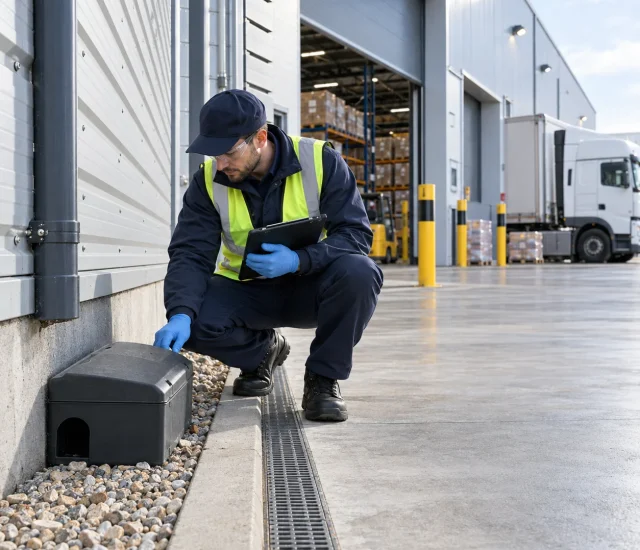
Methods We Use
Each method below is considered before any chemical, and most sites need a combination of them. What is used, where and why is recorded on every visit, so the approach can be shown, not just claimed.
Door seals, mesh, brush strips and sealed service penetrations that stop pests getting in, so there is less to treat and far less need for bait on site.
Monitoring blocks, pheromone lures and fly killer catch counts that show activity between visits without leaving any poison in place across the site.
Snap traps, multi-catch mouse traps and insect traps that take pests out physically wherever the risk does not justify a chemical treatment on site.
Netting, spikes, wire and exclusion that keep birds off buildings for good, instead of culling, with fouling cleared and sanitised as part of the work.
Advice on waste storage, stock rotation, cleaning schedules and drainage that removes the food, water and shelter pests rely on to settle in a site.
Where a chemical is needed, the least hazardous effective product, placed precisely, for as short a time as the risk assessment allows, then removed.
Wildlife and the Law
Rodenticides are the biggest risk to wildlife. Barn owls, kestrels, red kites, foxes and pets eat poisoned rodents, and secondary poisoning is how anticoagulants enter the food chain. As a Think Wildlife signatory, Shield follows the Campaign for Responsible Rodenticide Use Code, so bait is a last resort, placed securely and removed once the job is done.
The rules tightened in 2025. Since 1 January 2025, second-generation anticoagulants can no longer be used away from buildings in Great Britain, and permanent baiting has to be justified by a documented risk assessment.
Birds are protected by default. Under the Wildlife and Countryside Act 1981 all wild birds, their nests and eggs are protected. Feral pigeons and a few other species can be controlled only under a general licence, and only where non-lethal methods have genuinely been tried first. That is why proofing and exclusion lead every Shield bird programme.
Other wildlife counts too. Hedgehogs, bats and bees can all be harmed by careless treatment, so surveys note what else lives on and around a site, and treatments are planned to leave it alone.
Pest Management
Proofing, housekeeping and environmental changes that take away the food, water, shelter and access pests need, each logged as an action with an owner and a date to close it by.
Non-toxic monitoring points, pheromone lures and fly killer counts that show where activity is and whether it is rising, so action is taken early and in the right place.
Physical removal by trapping, exclusion and bird deterrence wherever the pest and the premises allow it, so no residue is left behind and there is no risk to other wildlife.
Chemical treatment only where the risk assessment justifies it: the least hazardous effective product, placed precisely, recorded with the reason, and removed afterwards.
AI Pest Management
Insectram records every visit, every device and every product applied, with the quantity, the location and the reason it was used. That gives your auditor, your sustainability team and your customers evidence that chemical use is proportionate, and the trend data shows whether prevention is reducing it.

Pests We Treat
Each of these goes through to how Shield Pest Management handles it. If what you have is not listed, the answer is still a survey rather than a guess.
Proofing, sanitation and non-toxic monitoring first, then traps. Rodenticide only where justified under the CRRU Code, placed in secure stations and then removed.
Netting, spikes, wire and exclusion keep pigeons and gulls off buildings for good. Lethal control is a last resort, and only where a general licence permits it.
Breeding sites in drains, waste and wet areas are found and removed, and LED fly killers use less energy and create far less lamp waste than fluorescent tubes.
A nest away from people can often be left to die off naturally in autumn. Treatment is kept for nests that put staff, customers or deliveries at a real risk.
Gel baits placed in cracks and voids use tiny amounts of product exactly where cockroaches feed, instead of spraying insecticide across the whole of a kitchen.
Pheromone monitoring finds beetles and moths early, stock rotation and cleaning remove their food, and any treatment is confined to the affected stock or area.
Bait that workers carry back to the colony uses far less product than surface sprays, which scatter the trail and leave a residue on surfaces where food is prepared.
Trapping by trained technicians as the first choice around farms, sports grounds and estates, with the legal and welfare position explained before work starts.
Tell us about the site and what has been seen. A BPCA approved Shield pest controller will survey the premises and set out a prevention-led programme, with any chemical use justified and recorded.
A: On most commercial sites it is more effective over time. Proofing and housekeeping remove the reason pests arrive, so the problem does not keep returning, while chemical-only control deals with the pests present today and leaves the cause in place.
A: Sometimes, but only where the risk assessment justifies it. As a Think Wildlife signatory, Shield follows the CRRU Code: bait goes in secure stations, is used for as short a time as possible and is removed once activity stops. Since 1 January 2025, second-generation anticoagulants cannot be used away from buildings in Great Britain.
A: Yes. BRCGS, SALSA and other standards expect pest control built on prevention, monitoring and documented risk assessment, which is what integrated pest management provides. Every product used is recorded with the reason it was used, which is the evidence an auditor asks for.
A: Yes. Insectram records every visit and every product applied, so Shield can show how chemical use on your site changes over time. Switching electric fly killers to LED also cuts energy use and lamp waste, and the LED cost calculator estimates the running-cost saving.
A: Yes. Shield technicians hold the RSPH Level 2 qualification, complete their CPD through BPCA and work to BPCA codes of practice, which cover the safe and proportionate use of every product they apply.