
Warehousing & Logistics
Large open volumes, constant goods movement and doors that have to stay open. Shield builds warehouse pest control programmes around how the building actually operates, not how it looks on a drawing.
At a Glance
Warehouse pest control is a contracted programme built around the perimeter, the loading bays and the racking. It combines external rodent control, insect monitoring and electronic fly killers at goods-in points, bird proofing of the roof and canopy, and proofing of every gap created by daily operation — with dated records and trend analysis that satisfy your customers’ supply chain audits.
The Problem
Nothing about a working distribution centre is designed to exclude pests. Every one of these is a normal operational requirement that happens to be an open door.
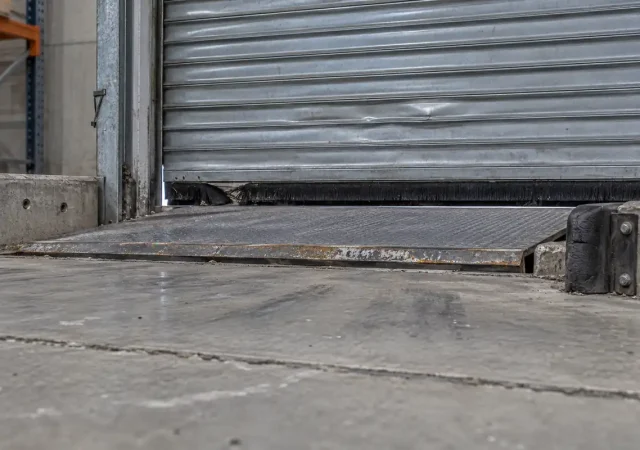
Loading bays open through every shift, with vehicle movements making a closed-door policy impractical.
Hundreds of metres of external wall, often bordered by grassland, drainage or neighbouring yards.
Stock to height, tight to walls, with no inspection gap and pallets that sit for months.
Goods arriving from multiple suppliers, any of which can introduce stored product insects or rodents.
Long roof runs, canopies and steelwork that gulls, pigeons and starlings treat as ideal nesting.
Volume spikes that fill every aisle, block inspection routes and push waste handling past its design capacity.
The Programme
Rodent control worked from the outside in, so pressure is intercepted at the boundary rather than found in the racking.
Electronic fly killers positioned and specified for bay layout and lighting, with catch data recorded per unit and trended.
Brush seals, shutter gaps, pipe penetrations, drainage and personnel doors — the small failures that account for most internal activity.
A defined inspection route with a required wall gap, so monitoring can actually be carried out and evidenced.
Netting, spiking and canopy proofing under the relevant wildlife legislation, with fouling removal where needed.
Pheromone monitoring at goods-in and in long-dwell stock, to catch an introduced infestation before it spreads through the racking.
Audit Evidence
Most distribution sites are audited on behalf of the brands they hold stock for, against the same standards their customers are certified to.
Every monitoring point numbered and mapped, matching what is on the wall, including external points.
Every visit logged and signed, with gaps explained rather than left blank.
Catch data read over time by zone, so a rising pattern at one bay is visible and acted on.
Recommendations tracked to evidenced completion, not repeated across visits.
BPCA membership, RSPH qualifications and CHAS accreditation, current and on file.
Actives, dosages, operator and justification for every application.
Our Method
A field biologist walks the perimeter, the bays, the racking runs and the roofline, and writes a site-specific risk assessment. Monitoring density and visit frequency follow from that rather than from a price list.
The proofing plan is issued with the assessment and tracked as open actions until each item is closed and photographed. Monitoring then runs continuously, and the first trend review lands at ninety days with a documented view of what changed and what to do next.

AI Pest Management
Insectram holds the site plan, the monitoring readings, the trend analysis and the document folder in one place, with QR-coded points so a reading is always traceable to a location. Your customers’ auditors can be granted read access for the audit window. For multi-site operators, every depot reports the same way and rolls up to a portfolio view in a single login.
Pests We Manage
Perimeter and drainage pressure
Racking, voids and cabling
Loading bays and waste areas
Introduced in pallets and long-dwell stock
Roof, canopy and steelwork nesting
Warm plant rooms and canteens
Roof voids, canopies and external walls
Floor joints, expansion gaps and welfare areas
Client Feedback
“Shield’s commercial pest control service is impressive. Their technicians are professional and thorough, ensuring our warehouse remains pest-free.”
Warehousing
“We’ve been using Shield’s Insectram reporting system and it has changed how we manage pest control. Real-time updates and trend analysis keep us proactive.”
Multi-site Facilities
“Shield’s audit compliance support for our BRCGS certification has been invaluable. Their knowledge of the standards has made our audits much more streamlined.”
Food Manufacturing
Areas We Cover
Based in Selby, servicing distribution and logistics sites across the region with a 24-hour emergency response.
A Shield field biologist will walk your perimeter, bays, racking runs and roofline, identify the pressures specific to how your site runs, and set out a programme built around the standard your customers audit you to. No obligation.
A: Typically every six to eight weeks, set by the risk assessment. Food-grade storage, high volume or a history of activity pulls that closer together.
A: By working the perimeter first. If external pressure is intercepted at the boundary and the gaps are proofed, an open bay door is far less of a problem than it looks.
A: The record is current every day. Site plan, readings, trend analysis and document folder are in the portal and can be shown immediately.