
Food Business Pest Control Requirements
Every UK food business has a legal duty to control pests, certified or not. This page sets out what the law asks for, the records an EHO expects to see on an inspection, and how pest control fits your HACCP plan.
At a Glance
UK food hygiene law requires every food business to have adequate procedures in place to control pests, to keep premises designed and maintained so that pests are kept out, and to run food safety procedures based on HACCP principles. The law sets no required contractor or visit frequency, but an environmental health officer will expect evidence that the procedures work: a contract or competent in-house arrangement, a plan of monitoring points, visit reports, a record of pest sightings and the action taken, and proofing repairs closed out.
The Legal Framework
Pest control duties for UK food businesses come from several pieces of legislation. None of them prescribes a contractor or a frequency; all of them expect you to prove control.
Retained Regulation 852/2004 requires adequate procedures to control pests, and premises designed and maintained so that pests are kept out of food areas.
Food businesses must run permanent procedures based on HACCP principles. Pest control is a prerequisite programme that the whole food safety plan relies on.
It is an offence to sell food that is unfit or contaminated. Evidence of pest contamination can lead to prosecution as well as lost stock and reputation.
Occupiers must tell the local authority about substantial numbers of rats or mice, and councils can require the owner to carry out works to keep the land free of rodents.
Every pesticide used on site needs a COSHH assessment, and the people applying it must be competent, trained and working strictly to the product label.
Birds, bats and other protected species limit what can be done and when, and rodenticide use is governed by product authorisation and stewardship rules.
What an EHO Checks
An inspection is not a pest control audit, but pests and proofing are among the first things an officer checks, because the evidence is easy to see and hard to explain away.
Evidence of rodents, cockroaches or stored product insects in food areas, storage, behind equipment and around deliveries.
Gaps around pipes, damaged door seals, missing fly screens and holes in walls or ceilings that give pests a way in.
Food debris, spillages and poorly managed bins that give pests food and harbourage and undermine a control programme.
A current contract or competent in-house arrangement showing who is responsible and how often the site is checked.
Visit reports, a plan of monitoring points and a record of what was found, what was recommended and what was done.
Whether staff recognise the signs of pests, know how to report them and understand what to do when activity is found.
Pest Control and HACCP
Pest control is rarely a critical control point. It sits beneath the HACCP plan as a prerequisite, and if it fails, the hazard analysis built on top of it no longer holds.
Pests are a physical and microbiological contamination hazard, so they belong in your hazard analysis with controls, monitoring and corrective actions written down.
HACCP expects monitoring to be recorded and verified. Numbered devices, dated visit reports and trend analysis give your team the evidence that control is working.
When activity is found, the plan should say what happens next: who is told, what is inspected, which stock is held and how the action is closed out and signed off.
Where Businesses Get Caught Out
Most enforcement action for pests follows the same pattern: activity that had been seen, a problem that was known, and no record of anything being done.
Evidence seen by staff for weeks but never cleaned up, reported or treated.
The same gap flagged on report after report with no repair ever recorded.
Pest control called in only when there is a problem, with nothing between.
Visit reports filed away with recommendations nobody on site has seen.
Activity seen by the team but never reported, because nobody knew they should.
Food exposed to pest activity left on sale instead of being held and checked.
Our Method
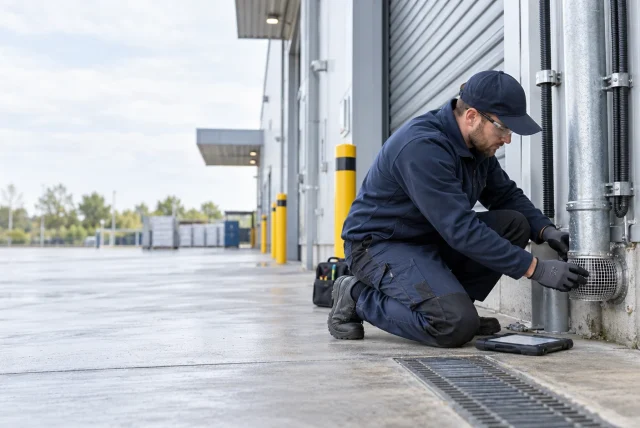
A Shield technician surveys the whole premises, from the delivery door to the bin store, and records every sign of activity and every proofing defect with a photograph. Monitoring is installed where the risk is, numbered and marked on a plan, and a visit frequency is agreed against what was found.
Proofing is carried out by Shield wherever possible, and every recommendation is recorded with an owner and a date, so when an officer asks what has been done about pests, the answer is already in the file.
AI Pest Management
Insectram holds every visit report, the plan of monitoring points, pest sightings, recommendations and product data sheets in one place, updated in real time as each visit is completed. Nothing depends on a paper folder being in the right drawer on the day of an inspection.
Management see real-time data for a single site and consolidated across every site they run, so a rising count or an open action is caught early rather than found by an inspector. Every technical decision stays with your BPCA-qualified technician.

Food Hygiene Ratings
Under the Food Hygiene Rating Scheme, officers score hygienic food handling, the condition of the premises and their confidence in how food safety is managed. Pest activity and poor proofing weigh on the first two and missing records on the third, so one pest problem can pull down all three scores at once.
Where there is an imminent risk to health, such as a serious infestation, officers can close premises straight away. A documented programme with current records is the most direct protection against both.
Support When It Matters
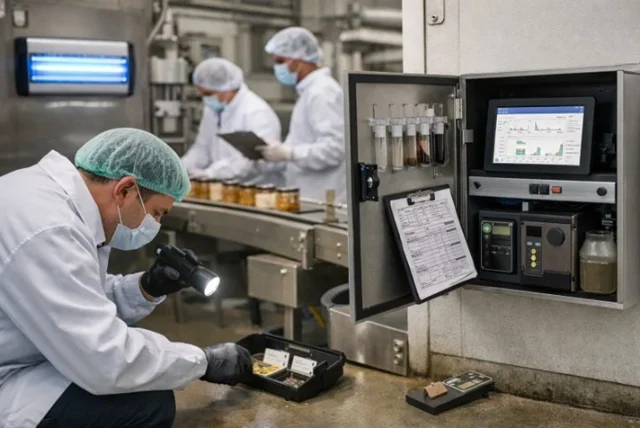
A technician walks the premises as an officer would, checks the records are current and complete, and lists anything that would be raised, with an owner and a date to close it.
When activity is found, Shield responds quickly, treats the source, proofs the entry point and records everything, so you can show an officer what happened and what was done.
If an officer has raised pest issues, Shield works through the report with you, carries out treatment and proofing, and provides the records to support a revisit request.
Related Pages
Most food businesses sit somewhere between a small kitchen and a certified factory. These pages cover the standards, sectors and training that build on the legal minimum set out above.
How a certified food site builds the complete pest control file its auditor expects to see, document by document.
Proportionate, achievable pest control for smaller UK food and drink producers, without BRCGS overhead.
How a site-specific pest risk assessment sets monitoring, visit frequency and response times for each area.
Pest control for restaurants, kitchens and hotels, where an EHO inspection is the audit that matters most.
Documented, risk-assessed pest control for food manufacturing sites working to BRCGS, SALSA and retailer codes.
Training that helps staff recognise the signs of pests, report them and keep records an officer trusts.
Client Feedback
“Shield’s audit compliance support for our BRCGS certification has been invaluable. Their knowledge of the standards has made our audits much more streamlined.”
Food Manufacturing
“We’ve been using Shield’s Insectram reporting system and it has changed how we manage pest control. Real-time updates and trend analysis keep us proactive.”
Multi-site Facilities
“Shield’s commercial pest control service is impressive. Their technicians are professional and thorough, ensuring our warehouse remains pest-free.”
Warehousing
Areas We Cover
Based in Selby, Shield helps restaurants, kitchens, food producers and retailers across Yorkshire, the Humber and the North of England meet their legal pest control duties. Independent since 2002, BPCA registered, £10m public liability, 24-hour emergency response.
Let Shield review your current pest control arrangements and records against what an environmental health officer expects to see. We will point out anything an officer would raise and set out what it takes to put it right. No obligation.
A: Yes. UK food hygiene law requires every food business to have adequate procedures in place to control pests and to keep its premises designed and maintained to keep them out. The law does not require a contractor or set a visit frequency, but you must be able to show that your procedures work, and most businesses use a contract because it provides that evidence.
A: There is no prescribed list, but an officer will expect to see your pest control contract or in-house arrangement, a plan of monitoring points, reports from recent visits, a record of any pest sightings and what was done about them, and evidence that recommended proofing and cleaning have been carried out.
A: Usually not. Pest control is normally treated as a prerequisite programme that underpins the HACCP plan rather than a critical control point within it. Pests should still appear in your hazard analysis, with the controls, monitoring and corrective actions recorded, because if the prerequisite fails the plan built on it does not hold.
A: Yes. Where there is an imminent risk of injury to health, such as a serious pest infestation, an officer can serve a hygiene emergency prohibition notice and close the premises immediately, subject to confirmation by a court. Less serious issues are usually dealt with through an improvement notice or written advice with a deadline.