
Cockroach Control
Cockroaches are the pest most likely to stop a kitchen trading. They breed faster than a single treatment can keep up with, and the wrong product scatters them further into the building, which is why this job is done in stages rather than in one visit.
What Happens
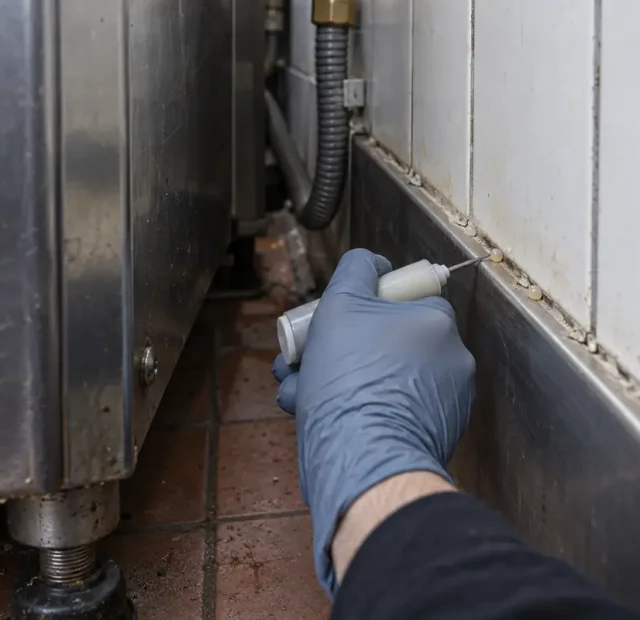
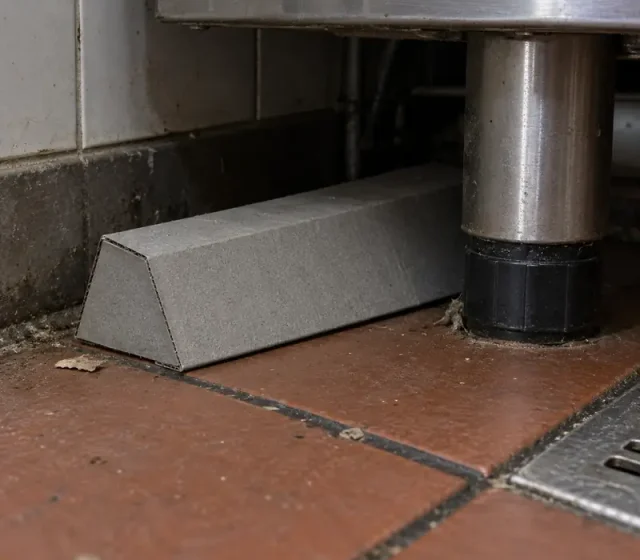
The first visit maps the population rather than treating it. Monitors go down in the places cockroaches actually harbour, which tells us the species, the scale and which parts of the building are involved. A kitchen with activity behind one appliance is a different job from a building where they are moving through risers between units. Treatment is then gel bait applied to harbourages and runs, usually alongside an insect growth regulator that stops the next generation reaching breeding age, and targeted residual work where the layout justifies it.
Follow-up visits are part of the treatment, not an upsell: eggs are protected inside the case until they hatch, so a population is cleared over weeks as successive hatches meet the bait. The last visit is a monitoring check that confirms clearance rather than an assumption of it.
Where They Harbour
Cockroaches spend the day pressed into cracks near warmth, moisture and food, and they are nocturnal, so what you see by day is a fraction of what is there.
Ovens, fryers, dishwashers, fridges and their motors. Warm, dark, greasy and almost never moved, which makes it the first place we look.
Gaps around pipework, behind tiling, under coving and in failed sealant. The harbourage is usually the building fabric rather than the equipment.
Oriental cockroaches in particular use drains, gullies, ducting and basements, moving up into the building from cooler damp areas.
Control panels, vending machines, coffee machines and appliance motors, where the residual warmth is exactly what they are looking for.
The commonest way they arrive. Cardboard outers, produce crates, laundry and second-hand equipment carry them in from somebody else’s problem.
In flats, HMOs and parades of units they move between properties through service voids and shared walls, which is why treating one unit alone fails.
How We Work
Monitors show the species, the scale and the harbourages. Treating on a sighting alone means treating where a cockroach walked rather than where they live.
Gel bait and growth regulators work with cockroach behaviour. Blanket spraying repels them deeper into the fabric and turns one harbourage into several.
Adjoining rooms, units above and below, drains and voids. A German cockroach population does not respect the boundary of the room that reported it.
Clearance is proven by monitors showing nothing over time. Quiet is not the same as clear, and the difference matters to an auditor.
Identification
German cockroaches are small, light brown, and the serious commercial problem. They live indoors year round, prefer warm humid areas such as kitchens and plant rooms, breed quickly, and the female carries the egg case until close to hatching, which is why populations build faster than people expect and why treatment has to span several weeks of hatches. Oriental cockroaches are larger, darker and slower, prefer cooler damp conditions, and are usually associated with drains, gullies, basements and external areas, arriving from below rather than breeding in the kitchen itself.
The distinction is not academic: it changes where the bait goes, whether the drains are the real job, and how long clearance takes. Getting it wrong is one of the commonest reasons a treatment appears to work and then does not.
Commercial
A cockroach found during an environmental health inspection of a food business is one of the few pest findings that can affect whether you keep trading, and in food manufacturing it is a zero tolerance finding in any audited standard. That puts speed and discretion ahead of almost everything else.
Shield attends quickly, works around service where it can, treats with products appropriate to a food environment, and documents the species, the locations, the products applied and the follow-up results. On multi-unit sites we treat the spread rather than the complaint, because a population moving through risers between kitchens will simply return to a unit treated on its own. Cockroach allergen is also a recognised asthma trigger, which matters in care settings, schools and housing.
Before You Spray Anything
Aerosols and foggers do two things to a cockroach infestation, and both are unhelpful. They kill the insects in the open, which are the minority, and they drive the rest deeper into voids, adjoining rooms and neighbouring units, turning one harbourage into several. They also leave a repellent residue across the surfaces where gel bait needs to go, so the treatment that would have cleared the population is refused by it.
The practical advice is simple: if you think you have cockroaches, stop spraying, do not move equipment or stock around the building, and call somebody. A population that has not been scattered is quicker, cheaper and more certain to clear than one that has.
Domestic and Housing
Cockroaches in a block move between flats through service risers, shared walls, ducting and pipework, which is why a tenant treated in isolation often sees them back within weeks. The honest answer in housing is usually that the neighbouring properties need inspecting too, and that this is a landlord or managing agent conversation rather than a tenant one.
Shield works with landlords, housing providers and managing agents on exactly that basis: survey the block rather than the flat, treat the spread, and record what was found where, which is also what protects a landlord if the dispute becomes formal. For a house it is far simpler, and the main thing that helps is not spraying before we get there.

AI Pest Management
Cockroach work is judged on whether it worked, and the evidence is the monitor count falling to nothing and staying there. In Insectram every monitor is numbered and mapped, every visit is dated, and the trend across the treatment is visible on one screen, which is what turns a claim that it was treated into the week it actually cleared.
For a food business facing an inspection or an audit, that record is the difference between a conversation and a finding.

Areas We Cover
Based in Selby, Shield covers commercial and domestic property across Yorkshire, the Humber and the North of England. Independent since 2002, BPCA registered, CRRU compliant, £10m public liability, 24-hour emergency response.
A: Weeks rather than days, and that is true of any competent treatment. Egg cases are protected until they hatch, so no single application reaches the whole population. Clearance happens as successive hatches meet the bait and the growth regulator. A contained kitchen problem caught early is usually two to three visits. A building where they have spread through risers takes longer, because the job is the building rather than the room. Anyone promising same-day eradication is describing the insects you can see, not the population.
A: Usually not. Gel bait is applied precisely into harbourages rather than sprayed across surfaces, so treatment can normally be carried out around service or between shifts with the right preparation. Where a deep clean, equipment moves or drain work are needed, those are planned with you rather than sprung on you. What does risk closing a kitchen is leaving an active infestation for an environmental health officer to find.
A: Usually not, and this matters in a dispute. Cockroaches are carried in: cardboard outers, produce crates, laundry, second-hand equipment, or through shared walls and risers from a neighbouring unit. Hygiene affects how fast a population grows once it is in, not whether it arrives. What we can tell you after the survey is which of those routes is the likely one, which is often the more useful answer commercially.