
Red Tractor Pest Control
Red Tractor does not ask whether you have a pest contractor. It asks for effective control of vermin, evidenced by dated site surveys, an environmental risk assessment, a bait plan and, in a grain store, a bait box map. Shield produces all of it as part of the service.
At a Glance
Red Tractor sets vermin control out as a Key Standard: there must be effective control of vermin, and toxic bait must be used responsibly. In practice that means documented site surveys at the frequency your scheme sets, an environmental risk assessment completed before any baiting, a bait plan giving point locations, bait types, inspection schedules and replenishment dates, bait stations that are secured, clearly identified and inaccessible to non-target animals, no permanent baiting, and a COSHH assessment where five or more people are employed.
What the Standard Asks For
Vermin control runs through every Red Tractor farm scheme under the VC codes. The wording shifts slightly between crops and livestock, but the evidence an assessor wants is the same.
VC.1 is a Key Standard. A failure here is not a minor observation on the report, it is the category that puts your certification at risk.
Quarterly for combinable crops and sugar beet, annually for beef and lamb while stock are housed or feed is in store. Dated, with locations, findings, actions required and completion dates.
Vegetation build-up against farm structures is checked on the day of the assessment. It is the quickest non-conformance an assessor can write and the easiest to prevent.
Completed before any toxic bait goes down, with non-chemical methods considered first and the least toxic option taken from the hierarchy rather than the most convenient one.
Point locations, bait type, inspection schedule and replenishment dates, with stations secured, clearly identified and positioned so non-target animals cannot reach them.
Toxic bait is removed once the treatment ends. Permanent baiting is expressly to be avoided, and CRRU compliance is read alongside it.
The Records
Assessors work from the records list attached to each standard. For pest control, these are the six that carry it.
Dated and legible, showing where was inspected, what was found, what action was needed and when it was completed. Not a signature on a service sheet.
Written before baiting, naming the non-chemical measures considered and justifying the product chosen.
Locations, bait type, inspection dates and replenishment, kept current when a point is moved, added or removed.
What was laid, where, when, how much, and when it was taken up again at the end of the treatment.
Required wherever toxic paste is used in a grain store, with every box position marked and matching what is physically fixed to the building.
COSHH assessments where five or more people are employed, plus documented training for any farm staff carrying out baiting themselves.
How We Build It
Quarterly on combinable crops, annual on livestock while stock are housed, and more often where the risk assessment or the pressure justifies it. Dates are fixed in advance so nothing lapses over a busy harvest.
A field biologist completes the assessment first, works down the hierarchy from proofing, hygiene and trapping, and only then justifies a toxic product if one is genuinely needed.
Every point numbered, secured, identified and drawn on a plan of the yard and stores, so the paperwork and the farm say the same thing on the day.
Shield technicians are CRRU compliant and DBS checked. Bait is taken up at the end of the treatment and the removal is recorded, which is what an assessor checks for.
Where Farms Lose Points
None of these are difficult to fix. They are the things that get missed between harvest, housing and the assessment date.
Nettles and rank grass up to the grain store wall, checked and written up in the first ten minutes of the visit.
A thorough survey at certification, then nothing dated since. The standard asks for a rolling record, not a founding document.
Bait boxes that have been down continuously for years with no treatment period and no removal recorded.
Points moved when a shed was rebuilt, never redrawn on the plan.
Wax blocks or loose grain bait inside a store holding crop, where only gel or paste is permitted.
The standard expects dead and trapped vermin to be searched for and disposed of at every bait point check, and for that to show in the record.

Our Method
A field biologist walks the yard, the grain stores, the feed stores and the building fabric, and writes the survey against the VC standards for your scheme. Where bait is justified, the environmental risk assessment is completed first and the bait plan is drawn and numbered. Visits are scheduled to the frequency the scheme requires, with recommendations raised in the portal and assigned to an owner. At ninety days you have a dated survey record, a current plan and a closed-out action list, ready for the assessment rather than assembled after the booking.
AI Pest Management
Insectram holds the yard and store plans, the numbered bait points, every inspection, every recommendation and every document in one place. Survey dates, baiting records, the environmental risk assessment, COSHH data and RAMS all sit against the site, so an assessment window is a login rather than a search through a folder in the office. Assessors can be given direct access. AI analytics surface seasonal pressure and recurring hotspots, while every technical decision stays with your BPCA-qualified technician.

Grain Stores
Since 1 October 2022 Red Tractor has allowed toxic rodent bait in a grain store while combinable crops are in store, under CR.VC.3 and on tight conditions.
There has to be a defined need, evidenced by a site survey or a pest control contractor report. Only gel or paste products may be used inside the store: loose grain baits, wax blocks and gel sachets are not permitted. The paste goes into lockable, secured, clearly identified bait boxes fixed to the building and positioned where they will not be crushed or displaced, with every position recorded on a store map. Farm staff who do the work themselves have to read and document Red Tractor’s safe mouse control guidance.
A professional contractor is exempt from that training requirement, which is one of the simpler reasons to use one.
Field Biologist Support
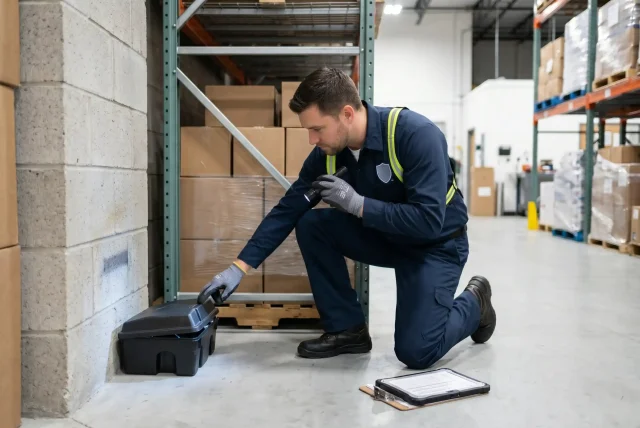
A qualified field biologist writes the site survey in the language the standard uses, recording where was inspected, what was found, what needs doing and by when, so the document answers the assessor’s question without interpretation.
Where toxic bait is genuinely needed, the contractor report is the defined need CR.VC.3 asks for, and the environmental risk assessment behind it shows the hierarchy was worked through rather than skipped.
A field biologist can attend on assessment day and answer technical questions directly. Where a non-conformance is raised you get a corrective action plan with owners, dates and evidence requirements, closed out through the portal.
The Other Standards
Farms supplying into processing and retail rarely hold Red Tractor alone. Where a packhouse, mill or store also sits inside a food safety scheme, the programme is built to satisfy the strictest requirement in the set.
The food industry benchmark: documented IPM, trend analysis of catch data and a named contractor with proven competence.
Proportionate, achievable pest control for smaller UK food and drink producers, without the overhead of a BRCGS-scale system.
Rigorous, points-scored auditing with heavy emphasis on root cause analysis and trend interpretation.
Pest control as a prerequisite programme inside your wider food safety management system.
GFSI-recognised certification, accepted across global supply chains and demanding the same evidence discipline.
The documentation an environmental health officer asks for, and how pest control sits inside your HACCP plan.
Client Feedback
“Shield’s audit compliance support for our BRCGS certification has been invaluable. Their knowledge of the standards has made our audits much more streamlined.”
Food Manufacturing
“We’ve been using Shield’s Insectram reporting system and it has changed how we manage pest control. Real-time updates and trend analysis keep us proactive.”
Multi-site Facilities
“Shield’s commercial pest control service is impressive. Their technicians are professional and thorough, ensuring our warehouse remains pest-free.”
Warehousing
Areas We Cover
Based in Selby, Shield services Red Tractor assured farms, grain stores, packhouses and feed stores across Yorkshire, the Humber and the North of England. Independent since 2002, BPCA registered, CRRU compliant, £10m public liability, 24-hour emergency response.
A Shield field biologist will walk the yard and the stores, review your current survey records, bait plan and risk assessment against the vermin control standards for your scheme, and set out what it takes to close the gaps before your assessment. No obligation.
A: It depends on the scheme. Combinable crops and sugar beet require quarterly site surveys. Beef and lamb require an annual survey carried out while stock are housed or feed storage is in use. In both cases the survey has to be dated and record where was inspected, what was found, what action is required and when it was completed, and a higher assessed risk can justify going more often.
A: Yes, since 1 October 2022, but only under CR.VC.3. There must be a defined need evidenced by a site survey or contractor report, only gel or paste products may be used inside the store, and they must sit in lockable, secured, clearly identified bait boxes fixed to the building with every position recorded on a store map. Loose grain baits, wax blocks and gel sachets are not permitted.
A: No. Farm staff can carry out vermin control themselves, but they take on the same evidence burden: the environmental risk assessment, the bait plan, the survey records, the COSHH assessment, and, for grain store baiting, reading and documenting Red Tractor's training guidance. A professional contractor is exempt from that training requirement and produces the records as part of the service.