
Proofing & Prevention
Every pest on a site got in somewhere. Proofing is the only part of pest control that permanently reduces how much pest control you need, and it is the part most contracts quietly never get round to.
What Happens
A technician or field biologist walks the building envelope and the ground around it, looking for the routes in rather than for the pests. Drainage, doors, shutters, thresholds, service penetrations, cladding junctions, eaves, vents, windows, roof line, waste compounds and the vegetation against the wall. Everything found is written up as a prioritised schedule: what the defect is, which pest it admits, where it is on the site plan, a photograph, and what it needs.
High-risk items, such as an open drain run into a production area or a shutter with a two-inch gap onto a food store, come first, and cosmetic items are named as cosmetic rather than padded into the same list. The work is then carried out by Shield, with the completed items evidenced. On a contracted site each item sits in the portal with an owner and a date against it and stays open until it is closed out. A proofing survey can be booked on its own, with no contract attached.
What Gets Proofed
Different pests use different routes, and the same defect often admits several. A gap under a shutter is a rat run, a fly route and a bird entrance at the same time.
Defective runs, open interceptors, redundant pipework and missing covers. Non-return valves and repaired runs close the commonest route into an older building.
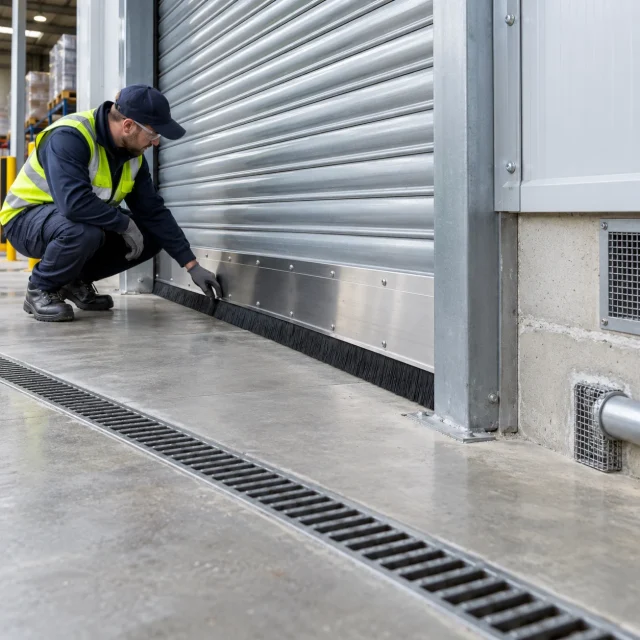
Brush seals, kick plates, sweeps, self-closers and shutter tracks. The cheapest work on any schedule and the most frequently deferred.
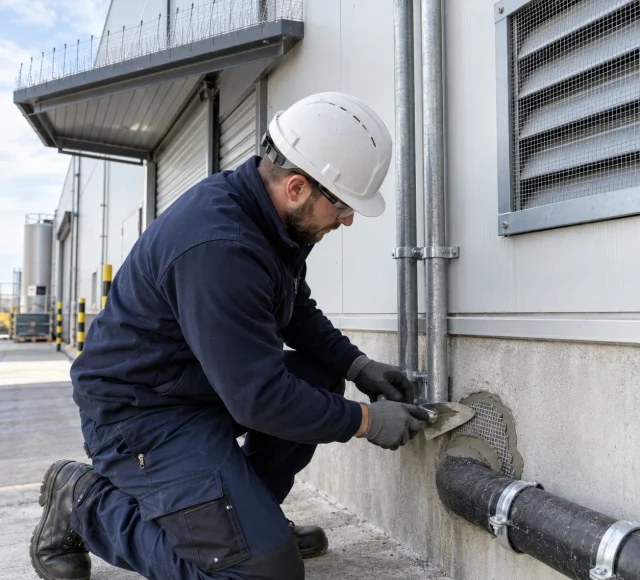
Cables, pipes and ducts through walls and floors, closed properly in mortar and mesh rather than in the expanding foam a rodent chews through.
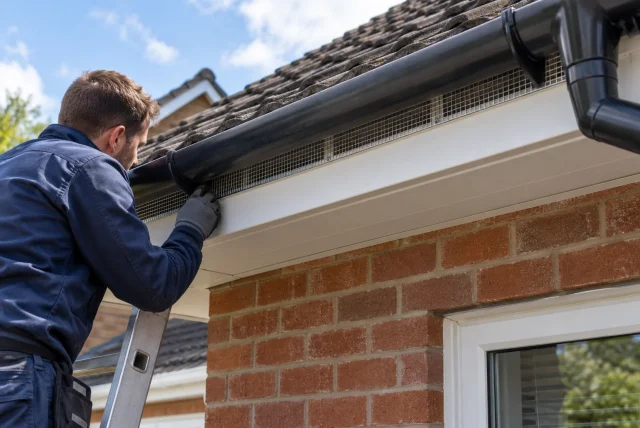
Missing tiles, open eaves courses, cladding junctions and boxing. Rats climb, birds nest and insects overwinter in all of them.
Insect screening, mesh to vents and louvres, and air curtains where a door has to stay open. Fly pressure is a proofing problem before it is a unit problem.
Vegetation against the wall, pallet stacks, bin compounds and standing water. Harbourage and food six feet from the door undo everything done to the fabric.
How We Work
The report covers the whole building and its curtilage. Proofing the one gap somebody pointed at moves the pest twenty feet along the wall.
High-risk defects on high-care areas first, then the rest, with cosmetic items named as cosmetic. A schedule that does not rank itself never gets started.
The right material for that detail. Mesh and mortar rather than foam, the correct brush profile, fixings that survive a Yorkshire winter and a fork-lift.
Each item photographed before and after, dated and signed off. On contracted sites it stays open in the portal until it is evidenced as done.
Audit Compliance
Auditors do not usually raise a pest finding because there are pests. They raise it because the site fabric admits them and nobody has done anything about it, or because the same recommendation has been made at every visit for a year and is still open. BRCGS, SALSA, Red Tractor, AIB, ISO 22000 and FSSC 22000 all expect the same three things here: a building maintained to exclude pests, a documented record of proofing defects found, and evidence that corrective actions have been closed out rather than repeated.
That is why a proofing schedule with owners and dates is worth more at an audit than a thicker folder of visit reports. Where fabric work is the client’s to do, the record showing it was raised, prioritised and tracked is itself part of the evidence.
Commercial Proofing
A monitoring contract on an unproofed building is a subscription to the same problem. Shield’s programmes treat the proofing schedule as the part of the service that should be shrinking each year: defects raised, prioritised, closed out, and the monitoring density reduced where the risk has genuinely gone. It works because the survey is honest about which items are proofing work we will carry out, which are building work for your maintenance team, and which are housekeeping that no amount of mesh will fix. Sites that run it this way see fewer call-outs, fewer non-conformances and a shorter recommendation list at every audit, and the ones that do not are still paying for visits to the same doorway three years later.
By Pest
Rodent proofing is about gaps, drainage and materials that resist gnawing: mesh, mortar, steel, correctly fitted. Insect proofing is about light, airflow and openings: screening, vent mesh, door discipline, air curtains and correctly sited fly units, since a fly problem is usually a route-in problem long before it is a unit problem. Bird proofing is netting, wire, spikes and skirting, and it carries access and wildlife law considerations the other two do not. Most commercial surveys produce all three, which is why they are worth doing together rather than calling three contractors who each see their own pest.
Domestic
Most domestic pest problems are one defect: an open eaves course, a broken drain, a missing air brick cover, a gap around a soil pipe. Treating the animal without closing the route is an annual arrangement rather than a fix, which is why every Shield domestic job ends with what needs sealing and why.
We carry out the proofing work ourselves; where the real problem is roofing, drainage or building work we will tell you that plainly rather than selling you mesh over a structural problem.
AI Pest Management
Proofing recommendations are the single thing most likely to be raised, photographed and then forgotten. In Insectram each one carries a location on the site plan, a photograph, a priority, an owner and a date, and it stays open until it is evidenced as done. Over a year that produces the thing an auditor most wants to see and most rarely gets: a list that is getting shorter, with dated proof of why.

Areas We Cover
Based in Selby, Shield covers commercial and domestic property across Yorkshire, the Humber and the North of England. Independent since 2002, BPCA registered, CRRU compliant, £10m public liability, 24-hour emergency response.
Tell us what the building is, what you are getting and where. We will survey the envelope, give you a prioritised schedule with photographs, and be straight about which items we will carry out and which are building work for you. Survey only is fine, and plenty of sites start there.
A: We carry it out. Shield plans and executes the proofing work itself: mesh, brush strips, sealing penetrations, drain work, insect screening and bird proofing. The only thing we bring in is access, so where a job needs scaffolding or specialist access equipment we will use a contractor for that, while the survey, the specification and the work stay ours. Genuine building work, such as a failed roof, a collapsed drain run or a door that needs replacing rather than sealing, is specified in writing with photographs so your maintenance team can price it. What we will not do is fit mesh over a structural defect and call it proofed.
A: On most sites it is the difference between managing a problem and ending it. Treatment reduces a population that the building will replace; proofing removes the route that replaces it. The honest caveat is that proofing cannot fix housekeeping: open waste, spillage, propped doors and stock against walls will sustain activity through a perfectly proofed envelope, which is why the survey covers both.
A: Usually, yes. Most of it is external or at the envelope, and the internal work is scheduled around production and cleaning windows the same way monitoring visits are. Items needing an area shut down, or hot works, are identified in the schedule so they can be planned into a shutdown rather than discovered on the day.