
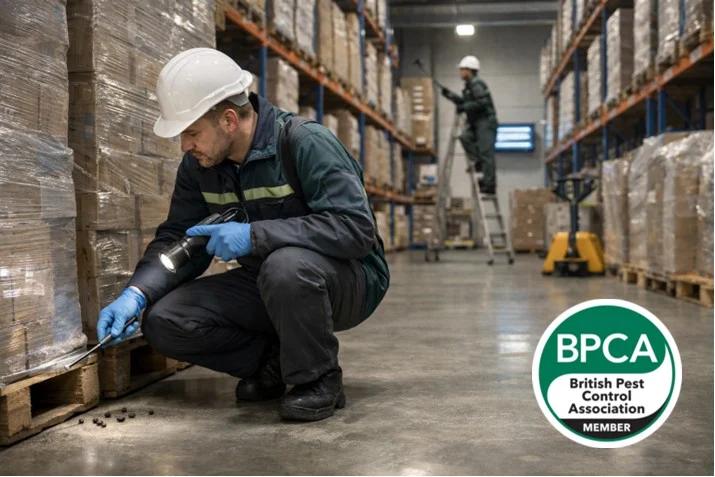
BPCA Approved Pest Control for Warehouses
Modern warehouse facilities require comprehensive pest control for warehouses to protect inventory, maintain hygiene standards, and ensure regulatory compliance. Whether managing food storage, distribution centres, or general warehousing operations, effective BPCA approved pest control provides essential protection against rodents, insects, and birds that threaten stock integrity and business reputation. Professional pest prevention practices combine proactive monitoring, targeted treatments, and environmental management to create sustainable protection systems.
With increasing audit requirements from major retailers and quality assurance bodies, businesses must demonstrate robust pest management protocols that meet industry standards. How can warehouse operators implement cost-effective pest control strategies whilst maintaining the highest levels of compliance and operational efficiency?
Key Takeaways
- Comprehensive pest control for warehouses protects valuable inventory and prevents contamination across storage facilities
- BPCA approved pest control ensures qualified technicians deliver compliant services meeting industry standards
- Effective pest prevention practices reduce long-term costs through proactive monitoring and environmental management
- Integrated pest management combines inspection, treatment, and proofing to address current infestations and prevent future problems
- Regular audits and detailed reporting demonstrate compliance with retailer requirements and food safety regulations
- Tailored warehouse solutions address sector-specific challenges in food storage, distribution, and general warehousing environments
- Professional pest control contracts provide scheduled visits, emergency response, and ongoing protection for business continuity
- Advanced monitoring systems enable early detection and rapid response to minimise pest activity risks
Warehouse Pest Challenges
Common Pest Species in Storage Facilities
Warehouse environments attract diverse pest species that exploit food sources, shelter, and breeding opportunities. Rodents represent the most significant threat, with rats and mice entering through gaps as small as 6mm to access stored goods. These pests contaminate products through droppings, urine, and gnawing damage whilst potentially spreading diseases including salmonella and leptospirosis. Their rapid breeding cycles mean small infestations quickly escalate without prompt intervention from pest control for warehouses.
Insect populations thrive in warehouses storing food products, with stored product insects, flies, and cockroaches causing extensive damage. Moths and beetles infest grain, flour, and dried goods, whilst flies contaminate surfaces and spread pathogens. BPCA approved pest control addresses these threats through targeted treatments and monitoring programmes. Consequently, early detection prevents widespread contamination and costly product recalls.
Environmental Factors Attracting Pests
Warehouse structures create ideal conditions for pest activity through shelter, warmth, and food availability. Loading bay areas provide entry points where doors remain open during deliveries, allowing rodents and insects unrestricted access. Poor housekeeping practices, including spillages and inadequate waste management, attract foraging pests seeking sustenance. Moreover, cluttered storage areas offer harbourage where populations establish undetected until significant damage occurs.
Temperature control systems in climate-controlled facilities can inadvertently create optimal breeding conditions for certain pest species. Warmth accelerates insect reproduction cycles whilst providing comfortable environments for rodent nesting. Implementing robust pest prevention practices requires addressing these environmental factors through improved housekeeping, structural maintenance, and operational procedures that limit pest opportunities.
BPCA Certification Standards
Qualification Requirements for Technicians
BPCA approved pest control requires technicians to complete rigorous training and certification processes demonstrating professional competence. Qualified operatives hold recognised qualifications from the Royal Society for Public Health, ensuring they understand pest biology, treatment methods, and safety protocols. This professional standard guarantees warehouse clients receive services from knowledgeable experts who apply evidence-based pest prevention practices. Furthermore, ongoing professional development keeps technicians updated on emerging threats and innovative control methods.
Certified companies implement comprehensive insurance coverage, including £10 million public liability protection that safeguards clients against potential claims. They maintain CHAS registration, providing independent verification of appropriate training and expertise currency. Such credentials differentiate professional services from unqualified operators who lack proper oversight and accountability.
Industry Standards and Compliance
BPCA membership requires adherence to strict codes of practice governing pest control for warehouses and commercial environments. These standards encompass safe pesticide usage, humane treatment methods, and environmental protection measures aligned with regulatory requirements. Members undergo regular audits verifying compliance with industry best practices and legal obligations. Accordingly, clients benefit from consistent service quality backed by professional oversight.
The association promotes responsible rodenticide use through Campaign for Responsible Rodenticide Use (CRRU) participation, minimising wildlife exposure risks. BPCA approved pest control companies implement integrated pest management approaches that prioritise non-chemical methods where appropriate. This responsible approach balances effective control with environmental stewardship and public health protection.
Inspection and Risk Assessment Protocols
Comprehensive pest control for warehouses begins with detailed site inspections identifying vulnerabilities and existing pest activity. Qualified technicians examine structural elements, storage practices, and operational procedures to assess infestation risks. These assessments document potential entry points, harbourage areas, and conditions conducive to pest establishment. Subsequently, findings inform tailored treatment plans addressing specific site requirements rather than applying generic solutions.
Risk assessments consider factors including product types stored, building age and condition, proximity to external pest sources, and operational patterns affecting exposure. BPCA approved pest control incorporates COSHH assessments ensuring safe chemical usage around stored goods and personnel. Regular re-assessments track changing conditions and treatment effectiveness, enabling proactive adjustments to pest prevention practices that maintain optimal protection levels.
Monitoring and Detection Methods
Advanced monitoring systems provide early warning of pest activity before populations reach damaging levels. Electronic monitoring units track rodent movement patterns, whilst pheromone traps detect flying insect presence in food storage areas. These tools generate data trends revealing seasonal patterns and high-risk zones requiring enhanced attention. Therefore, warehouse managers gain visibility of pest pressure enabling informed decision-making about resource allocation.
Inspection frequencies align with risk levels and audit requirements, with high-risk food facilities typically receiving weekly or fortnightly visits. Technicians document findings through detailed reporting systems capturing bait consumption, trap catches, and environmental observations. Modern pest control for warehouses increasingly utilises digital platforms providing real-time access to inspection records and trend analysis supporting compliance demonstrations.
Rodent Control Strategies
Baiting Programmes and Placement
Professional rodent control employs strategic bait station placement targeting areas where rats and mice travel and feed. External perimeter protection creates defensive barriers preventing entry, whilst internal stations monitor for breaches and established populations. BPCA approved pest control utilises tamper-resistant stations meeting safety standards for commercial environments where staff and visitors access premises. These secure units prevent non-target species exposure whilst maintaining treatment effectiveness.
Bait formulations vary according to infestation severity and environmental conditions, with acute and chronic toxicants selected based on professional assessment. Rotation between active ingredients prevents resistance development in rodent populations. Technicians monitor consumption patterns adjusting station locations and bait types to maximise control outcomes whilst minimising unnecessary pesticide usage through targeted pest prevention practices.
Trapping and Exclusion Methods
Non-toxic control methods provide alternatives where chemical usage requires restriction or monitoring purposes demand live capture evidence. Snap traps deliver rapid results in sensitive areas including food preparation zones, whilst live-catch traps enable humane removal and identification of species present. These approaches form integral components of pest control for warehouses seeking to minimise pesticide reliance through integrated strategies.
Physical exclusion represents the most sustainable long-term solution preventing rodent access to warehouse facilities. Professional surveys identify structural deficiencies including gaps around pipework, damaged door seals, and compromised wall sections. Remedial works using appropriate materials seal entry points permanently eliminating infestation routes. Consequently, ongoing treatment requirements reduce substantially alongside associated costs and contamination risks.
Insect Management Solutions
Flying Insect Control Units
Electronic fly killers provide essential protection in warehouses handling food products where flying insects present contamination risks. Units employ ultraviolet light attracting flies, moths, and other flying pests to either electrocution grids or adhesive boards capturing specimens. BPCA approved pest control specifies appropriate unit placement avoiding contamination from insect fragments whilst maximising coverage across vulnerable areas. Regular servicing maintains operational efficiency and hygiene standards.
Modern LED technology delivers significant energy savings compared to traditional fluorescent tube units whilst maintaining equivalent catch rates. These advanced systems reduce running costs substantially over equipment lifespans, appealing to environmentally conscious operations. Professional installers position units strategically considering airflow patterns and insect behaviour to optimise protection levels through evidence-based pest prevention practices.
Crawling Insect Treatment
Stored product insects including beetles, weevils, and moths require specialised treatments targeting lifecycle stages from eggs through to adults. Residual insecticide applications to harbourage areas eliminate existing populations, whilst monitoring traps detect new activity enabling rapid response. Pest control for warehouses addresses these threats through regular inspections identifying infested stock before contamination spreads throughout facilities.
Fumigation provides comprehensive treatment for severe infestations affecting large quantities of stored goods. This controlled process eliminates all insect life stages within sealed areas, though requires temporary evacuation and specialist expertise ensuring safety and effectiveness. BPCA approved pest control companies possess necessary qualifications and equipment conducting fumigation operations meeting regulatory standards and client expectations.
Bird Deterrent Systems
Proofing and Exclusion Techniques
Birds including pigeons, starlings, and sparrows cause significant problems in warehouse environments through droppings, nesting materials, and noise disturbance. Professional bird control implements physical barriers preventing roosting and nesting on building structures. Netting systems exclude birds from loading bays and roof spaces, whilst spike strips deter landing on ledges and beams. These permanent pest prevention practices provide long-term protection without ongoing maintenance requirements.
Installation requires careful planning ensuring complete coverage of vulnerable areas whilst maintaining access for building maintenance activities. BPCA approved pest control considers aesthetic impacts alongside functional requirements, selecting discrete solutions preserving building appearance. Furthermore, bird proofing respects wildlife protection legislation governing control methods for native species, ensuring legal compliance throughout implementation.
Hygiene and Cleaning Services
Bird fouling creates slip hazards, disease risks, and unsightly conditions requiring specialist cleaning for safe removal. Professional bio-cleaning services employ appropriate protective equipment and cleaning agents eliminating contamination risks associated with pathogen-laden droppings. These services restore affected areas to hygienic standards whilst disposing of waste materials responsibly according to environmental regulations. Consequently, warehouse operators avoid potential health and safety violations whilst protecting employee wellbeing.
Regular cleaning schedules prevent accumulation where bird pressure remains despite deterrent measures. Pest control for warehouses integrates cleaning services with ongoing monitoring ensuring prompt identification of new activity. This comprehensive approach maintains facility standards supporting positive audit outcomes and operational continuity.
Audit Compliance Requirements
Retailer Standards and Documentation
Major retailers including Tesco, Morrisons, and Marks & Spencer impose strict pest control standards on warehouse suppliers and distributors. These requirements mandate contracted services from BPCA approved pest control companies demonstrating appropriate qualifications and insurance coverage. Detailed documentation including site plans, visit reports, and corrective action records must be maintained for audit inspection. Therefore, warehouse operators require pest prevention practices delivering both effective control and comprehensive evidence trails.
Documentation standards specify minimum information including technician identity, findings, treatments applied, and recommendations for client action. Reports must be available promptly to auditors assessing compliance with food safety protocols. Modern digital reporting systems streamline documentation processes whilst improving accessibility and trend analysis capabilities supporting continuous improvement initiatives.
BRC and Quality Assurance Standards
British Retail Consortium Global Standards represent internationally recognised benchmarks for food safety management requiring robust pest control programmes. Pest control for warehouses supporting BRC-certified operations must demonstrate integrated pest management approaches combining prevention, monitoring, and treatment elements. Regular inspections at appropriate frequencies provide evidence of proactive management rather than reactive responses to established infestations.
Certification bodies assess pest control documentation during audits, expecting clear evidence of professional service provision and effective results. Non-conformances identified through inadequate pest management can result in certification suspension impacting customer relationships and market access. BPCA approved pest control partners support compliance through audit-ready reporting and expert guidance on standard requirements.
Customised Warehouse Solutions
Food Storage and Distribution Facilities
Warehouses handling food products face heightened pest control challenges due to product attractiveness and stringent hygiene requirements. Specialised pest control for warehouses in this sector addresses risks through enhanced monitoring frequencies and rapid response protocols. Temperature-controlled environments require particular attention as warmth accelerates pest reproduction whilst food odours attract rodents and insects from considerable distances. Additionally, high product turnover creates continuous entry opportunities through incoming deliveries requiring vigilant inspection regimes.
BPCA approved pest control for food facilities incorporates strict chemical usage protocols ensuring treatments never compromise product safety. Technicians select appropriate formulations and application methods preventing contamination whilst maintaining control effectiveness. Pest prevention practices emphasise sanitation, exclusion, and environmental modification reducing reliance on chemical interventions where possible.
General Warehousing and Logistics
Non-food warehouses storing manufactured goods, textiles, or equipment require tailored approaches addressing sector-specific pest threats. Packaging materials provide nesting opportunities for rodents, whilst certain products attract specific insect species. Professional assessments identify unique vulnerabilities developing control strategies appropriate to operational requirements and risk profiles. Furthermore, logistics facilities with constant vehicle movements require enhanced perimeter protection preventing pest transportation between sites.
Flexible service delivery accommodates operational patterns including night shifts and weekend operations ensuring minimal disruption to business activities. Pest control for warehouses adapts to client schedules whilst maintaining treatment effectiveness and compliance standards. This customer-focused approach builds long-term partnerships supporting sustainable pest management outcomes.
Professional Service Delivery
Contract Options and Service Frequencies
Preventative contracts provide scheduled visits maintaining continuous protection against pest establishment and supporting audit requirements. Visit frequencies range from weekly inspections for high-risk food facilities to monthly or quarterly services for lower-risk operations. BPCA approved pest control companies design programmes balancing risk management with cost efficiency, recommending appropriate frequencies based on professional assessments rather than standardised packages.
Contract terms typically include emergency call-out provisions enabling rapid response to unexpected pest activity between scheduled visits. This comprehensive coverage ensures warehouse operators receive support when needed most, preventing minor issues escalating into major infestations. Additionally, contracted services often include reporting access, technical advice, and annual reviews optimising ongoing pest prevention practices.
Emergency Response and Call-Out Services
Urgent pest situations require immediate attention preventing product contamination, audit failures, or operational disruptions. Professional pest control for warehouses maintains emergency response capabilities providing same-day or next-day attendance for critical situations. Qualified technicians assess problems rapidly implementing appropriate treatments whilst minimising impacts on warehouse activities. Consequently, businesses maintain operational continuity despite pest challenges.
Emergency interventions feed into ongoing pest management programmes identifying systemic issues requiring long-term solutions. BPCA approved pest control uses reactive situations as learning opportunities enhancing preventative measures reducing future incident likelihood. This continuous improvement approach delivers increasing value throughout service relationships.
Technology and Innovation
Digital Reporting Platforms
Modern pest control for warehouses employs sophisticated digital platforms providing real-time access to inspection reports and compliance documentation. These systems enable warehouse managers to monitor pest activity trends, review technician findings, and generate audit-ready reports without manual compilation. Cloud-based access ensures information availability regardless of location supporting multi-site operations and remote management requirements. Moreover, automated alerts notify relevant personnel of significant findings requiring immediate attention.
Digital platforms capture photographic evidence, GPS verification of visit completion, and detailed action tracking improving accountability and service transparency. BPCA approved pest control companies investing in these technologies demonstrate commitment to service excellence and client communication. Pest prevention practices benefit from data analytics revealing patterns informing strategic decisions about resource allocation and control strategies.
Advanced Monitoring Systems
Electronic monitoring represents significant advancement in pest detection and management capabilities. Remote sensors detect rodent activity transmitting alerts enabling rapid response before populations establish. These systems reduce reliance on traditional bait stations in sensitive areas whilst improving detection sensitivity. Consequently, pest control for warehouses achieves earlier interventions with reduced chemical usage and environmental impacts.
Automated fly counting systems quantify flying insect pressure providing objective measures of control programme effectiveness. Data trending highlights seasonal patterns and identifies specific risk periods requiring enhanced interventions. Such evidence-based approaches optimise treatment timing and resource deployment improving overall programme efficiency and outcomes.
Cost Management and Value
Investment Benefits and ROI
Professional pest control for warehouses represents essential investment protecting far greater values in stored inventory, building infrastructure, and business reputation. Product contamination incidents result in costly recalls, disposal, and potential prosecution significantly exceeding annual pest control expenditure. BPCA approved pest control prevents these scenarios through proactive protection delivering substantial return on investment. Furthermore, audit compliance supports market access maintaining revenue streams dependent on quality certifications.
Preventative approaches prove more cost-effective than reactive responses to established infestations requiring intensive treatments and potential operational disruptions. Regular monitoring detects problems early when control remains straightforward and inexpensive. Therefore, consistent investment in pest prevention practices minimises total costs across extended periods whilst reducing business risks.
Minimising Product Loss and Damage
Pest activity causes direct financial losses through contaminated stock requiring disposal and indirect costs from production downtime during remediation. Rodent gnawing damages packaging rendering products unsaleable even without contamination. Insect infestations spread rapidly through stored goods necessitating extensive treatment or disposal of affected batches. Professional pest control for warehouses prevents these losses through vigilant monitoring and prompt interventions maintaining stock integrity.
Quality assurance failures resulting from pest issues damage customer relationships potentially costing far more than immediate product losses. BPCA approved pest control protects brand reputation through reliable service delivery preventing incidents that undermine customer confidence. This protective value justifies investment in professional pest prevention practices as essential business infrastructure.
Conclusion
Effective pest control for warehouses requires professional expertise combining qualified technicians, proven methods, and comprehensive monitoring systems. BPCA approved pest control delivers audit-compliant services protecting inventory whilst meeting retailer standards and quality certifications essential for market access. Implementing robust pest prevention practices through integrated management approaches provides sustainable protection reducing long-term costs and operational risks.
Warehouse operators benefit from partnering with experienced providers offering tailored solutions, emergency support, and innovative technologies maintaining the highest protection standards across diverse storage environments.
Frequently Asked Questions
How often should warehouses receive professional pest control inspections?
Inspection frequency depends on several factors including products stored, facility size, and audit requirements. Food storage warehouses typically require weekly or fortnightly visits maintaining rigorous pest control for warehouses standards. General storage facilities may operate effectively with monthly inspections supported by continuous monitoring systems. BPCA approved pest control companies conduct risk assessments recommending appropriate frequencies balancing protection needs with operational costs. High-risk areas within facilities might require more frequent attention than lower-risk zones, enabling targeted resource deployment.
Seasonal variations affect pest pressure requiring flexible pest prevention practices adjusting to changing conditions. Spring and autumn periods typically see increased rodent activity as populations seek shelter and breeding sites. Professional service contracts accommodate these variations ensuring adequate protection year-round without unnecessary visits during low-risk periods.
What qualifications should pest control technicians possess for warehouse work?
Professional technicians require RSPH Level 2 qualifications demonstrating competence in pest biology, control methods, and safe pesticide usage. BPCA approved pest control companies employ only qualified staff maintaining professional standards through ongoing training and development. CHAS registration provides additional verification of expertise currency and commitment to continuous professional improvement. These credentials ensure warehouse clients receive knowledgeable service from competent practitioners.
Insurance coverage including public liability protection represents another essential requirement protecting clients against potential claims. Reputable pest control for warehouses providers maintain comprehensive policies demonstrating financial responsibility and professional status. Furthermore, sector-specific training in food safety and quality standards benefits warehouses requiring audit compliance support through pest prevention practices aligned with industry requirements.
Can pest control treatments affect stored products or warehouse operations?
Modern pest control for warehouses employs targeted treatments minimising impacts on stored goods and operational activities. Qualified technicians select appropriate products and application methods ensuring safety around inventory whilst maintaining treatment effectiveness. BPCA approved pest control companies provide COSHH assessments documenting risk management measures protecting products and personnel. Consequently, properly executed treatments proceed without operational disruptions or product contamination concerns.
Scheduling flexibility enables treatments during quieter periods or specific zones minimising interruptions to warehouse activities. Electronic monitoring and non-toxic control methods reduce chemical usage in sensitive areas whilst maintaining robust pest prevention practices. Professional service providers communicate clearly about any temporary restrictions required during or following treatments ensuring client understanding and compliance with safety requirements.
What evidence do auditors require regarding warehouse pest control programmes?
Comprehensive documentation forms the foundation of audit compliance, with pest control for warehouses requiring detailed visit reports, site plans, and trend analysis. Reports must clearly identify technician credentials, findings, treatments applied, and recommendations for client action. BPCA approved pest control companies provide audit-ready documentation meeting retailer and certification body requirements without additional client compilation efforts. Digital reporting platforms streamline evidence provision improving accessibility for remote audits.
Auditors expect evidence of proactive management through regular inspections at appropriate frequencies rather than reactive responses. Corrective action tracking demonstrates client engagement with pest prevention practices addressing identified issues promptly. Service contracts with qualified providers, insurance certificates, and technician qualification records complete documentation packages supporting successful audit outcomes and maintaining quality certifications.