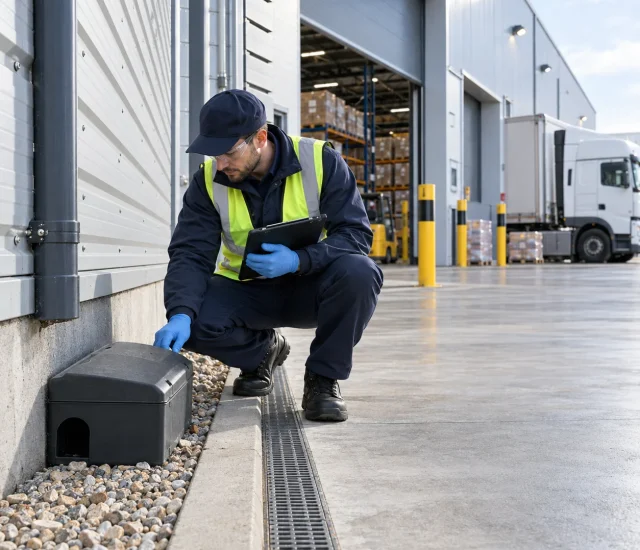
BPCA Compliant Pest Control for Commercial Premises

pest control for commercial premises, BPCA compliant pest control, food industry pest control standards

Pest Control Risk Assessment.

Commercial businesses face mounting pressure to maintain pest-free environments whilst ensuring compliance with stringent regulatory requirements. Furthermore, implementing effective pest control for commercial premises through certified professionals has become essential for protecting business reputation, safeguarding public health, and meeting audit obligations. Meanwhile, BPCA compliant pest control services provide the assurance that your pest management programme meets the highest industry standards. Additionally, understanding food industry pest control standards helps businesses navigate complex compliance requirements whilst maintaining operational efficiency.

Can your current pest management strategy withstand the scrutiny of regulatory inspections whilst providing comprehensive protection against evolving pest threats?

Key Takeaways

  • BPCA compliance ensures pest control for commercial premises meets the highest professional standards through certified technicians and comprehensive documentation
  • Integrated pest management strategies prioritise prevention and monitoring to reduce chemical dependency whilst maintaining effectiveness
  • Regulatory compliance requires understanding multiple frameworks including health and safety legislation and BPCA compliant pest control protocols
  • Site-specific risk assessments inform tailored treatment strategies that address unique operational challenges and environmental factors
  • Digital technologies enhance programme efficiency through real-time monitoring and automated reporting systems
  • Staff training creates collaborative partnerships between professional technicians and facility personnel
  • Sustainable treatment methods support environmental objectives whilst satisfying food industry pest control standards

BPCA Compliance Requirements

Professional Standards and Certification

BPCA membership represents the pinnacle of professional standards within the pest management sector. Moreover, certified technicians undergo rigorous training through the Royal Society for Public Health (RSPH) and must demonstrate competence across multiple pest species and treatment methodologies. Therefore, businesses selecting BPCA compliant pest control providers gain access to technicians who possess comprehensive knowledge of integrated pest management principles. Consequently, this expertise ensures that pest control for commercial operations adheres to both legal requirements and industry best practices.

Documentation and Audit Readiness

Compliance documentation forms the backbone of any successful commercial pest management programme. Furthermore, BPCA members maintain detailed records covering site inspections, treatment applications, risk assessments, and COSHH data sheets. Additionally, these comprehensive reporting systems satisfy audit requirements for schemes including BRCGS, SALSA, and Red Tractor certification. Therefore, food industry pest control standards demand meticulous documentation that demonstrates due diligence and ongoing compliance monitoring.

Integrated Pest Management Strategies

Prevention-Focused Approaches

Modern commercial pest management prioritises prevention over reactive treatments through systematic building assessments and proofing measures. Moreover, qualified technicians identify potential entry points, harbourage areas, and conducive conditions that might attract pest activity. Subsequently, implementing physical barriers, improved sanitation protocols, and structural modifications reduces the likelihood of infestations. Nevertheless, effective prevention requires ongoing collaboration between pest management professionals and facility management teams.

Monitoring and Early Detection Systems

Advanced monitoring technologies enable real-time pest activity tracking through digital sensors and smart trap systems. Furthermore, these innovations provide immediate alerts when pest activity increases, allowing for prompt intervention before infestations become established. Additionally, trend analysis identifies seasonal patterns and high-risk areas within commercial premises. Consequently, BPCA compliant pest control programmes incorporate these monitoring systems to enhance overall effectiveness whilst reducing chemical dependency.

commercial pest management

commercial pest control

Audit Compliance

Our specialised services ensure your pest control measures meet rigorous industry compliance standards & certifications.

Pest Awareness Training

We provide pest awareness training as an essential component of quality assurance and regulatory compliance.

Regulatory Compliance Framework

Legal Obligations and Standards

UK legislation mandates that commercial premises maintain pest-free environments under the Health and Safety at Work Act 1974 and Food Safety Act 1990. Moreover, businesses operating within the food sector must comply with additional requirements outlined in the Food Hygiene Regulations 2013. Therefore, failure to maintain adequate pest control for commercial premises can result in prosecution, fines up to £20,000, or immediate closure orders. Consequently, implementing BPCA compliant pest control services helps businesses meet their legal obligations whilst protecting against potential liabilities.

Industry-Specific Requirements

Different commercial sectors face varying levels of regulatory scrutiny regarding pest management protocols. Furthermore, food manufacturing facilities must adhere to strict guidelines from major retailers including Tesco, Marks & Spencer, and Morrisons. Additionally, pharmaceutical companies require compliance with Good Manufacturing Practice (GMP) standards that encompass comprehensive pest management protocols. Therefore, food industry pest control standards often exceed basic legal requirements to satisfy customer specifications and audit criteria.

Risk Assessment and Management

Site-Specific Hazard Identification

Professional pest management begins with comprehensive risk assessments that evaluate structural vulnerabilities, operational practices, and environmental factors. Moreover, qualified technicians assess factors including building age, proximity to pest harbourage areas, waste management procedures, and staff awareness levels. Subsequently, these assessments inform tailored pest management strategies that address specific risks whilst considering operational constraints. Nevertheless, effective risk management requires regular reassessment as business operations evolve.

Treatment Selection and Application

Modern pest control for commercial premises emphasises targeted treatments that minimise environmental impact whilst maximising effectiveness. Furthermore, BPCA compliant pest control providers utilise integrated approaches combining physical, biological, and chemical control methods. Additionally, treatment selection considers factors including pest species, infestation severity, site sensitivity, and regulatory requirements. Therefore, responsible rodenticide use follows Campaign for Responsible Rodenticide Use (CRRU) guidelines to protect non-target wildlife species.

Commercial Pest Control

We provide comprehensive pest management solutions tailored to protect your business and reputation.

Pest Management Technology

Shield Pest Management utilises Insectram, the UK’s premier real time integrated pest management system.

Quality Assurance and Continuous Improvement

Performance Monitoring and Evaluation

Effective commercial pest management requires ongoing performance monitoring through regular site inspections and treatment efficacy assessments. Moreover, BPCA compliant pest control programmes incorporate key performance indicators including pest activity levels, treatment response times, and compliance scoring. Subsequently, data analysis identifies trends and opportunities for programme enhancement whilst ensuring consistent service delivery. Consequently, continuous improvement processes help businesses maintain certification status and operational efficiency.

Staff Training and Awareness

Successful pest management depends on collaboration between professional technicians and trained facility staff who understand their roles in maintaining pest-free environments. Furthermore, comprehensive training programmes educate employees about pest identification, reporting procedures, and preventive measures. Additionally, regular refresher sessions ensure that staff remain current with evolving best practices and regulatory requirements. Therefore, food industry pest control standards often mandate specific training requirements for personnel involved in food handling operations.

Technology Integration and Innovation

Digital Reporting Systems

Contemporary pest management utilises sophisticated digital platforms that provide real-time access to inspection reports, treatment records, and compliance documentation. Moreover, these systems enable automated scheduling, trend analysis, and alert notifications that enhance programme efficiency. Subsequently, facility managers gain instant visibility into pest management activities across multiple sites whilst maintaining comprehensive audit trails. Nevertheless, technology integration requires adequate staff training and ongoing technical support.

Sustainable Treatment Methods

Environmental sustainability increasingly influences commercial pest management strategies through reduced chemical dependency and enhanced biological control methods. Furthermore, BPCA compliant pest control providers embrace innovations including pheromone traps, heat treatments, and targeted baiting systems that minimise environmental impact. Additionally, sustainable approaches often provide superior long-term results whilst satisfying corporate social responsibility objectives. Therefore, businesses implementing food industry pest control standards benefit from reduced chemical residues and enhanced public perception.

importance of industrial pest management

the importance of industrial pest management

importance of industrial pest management

the importance of industrial pest management

Conclusion

BPCA compliant pest control represents the highest standard of professional pest management available to commercial premises. Moreover, implementing comprehensive programmes that combine prevention, monitoring, and targeted treatments provides robust protection against pest-related risks whilst ensuring regulatory compliance. Businesses investing in professional pest control for commercial premises through certified providers gain peace of mind knowing their operations meet stringent food industry pest control standards.

Ultimately, the success of any commercial pest management programme depends on selecting qualified professionals who understand the complex interplay between pest biology, regulatory requirements, and operational constraints. Therefore, partnering with BPCA certified providers ensures access to the expertise, documentation, and ongoing support necessary for maintaining pest-free environments in today’s challenging commercial landscape.

Make an Enquiry

Please enable JavaScript in your browser to complete this form.
Name

Frequently Asked Questions

What qualifications should BPCA compliant pest control technicians possess?

BPCA compliant pest control technicians must hold RSPH Level 2 qualifications in pest management alongside ongoing continuing professional development certification. Moreover, they require comprehensive training in integrated pest management principles, chemical handling procedures, and health safety protocols. These qualifications ensure that pest control for commercial premises meets stringent professional standards whilst protecting both operatives and facility occupants. Furthermore, technicians must demonstrate competence across multiple pest species and treatment methodologies.

Additionally, BPCA membership requires companies to maintain appropriate insurance coverage including public liability protection up to £5 million. Therefore, businesses selecting qualified providers gain assurance that technicians possess both technical expertise and professional accountability. Food industry pest control standards often mandate additional specialised training for personnel working within sensitive environments such as food processing facilities.

How does integrated pest management differ from traditional reactive approaches?

Integrated pest management prioritises prevention and monitoring over chemical treatments through comprehensive site assessments and environmental modifications. Moreover, this approach combines physical barriers, biological controls, and targeted chemical applications to achieve long-term pest suppression. Therefore, pest control for commercial premises becomes more sustainable whilst reducing chemical dependency and environmental impact. Subsequently, businesses benefit from enhanced cost-effectiveness and reduced disruption to operations.

Traditional reactive approaches focus on eliminating existing infestations through immediate chemical applications without addressing underlying causes. Nevertheless, integrated strategies provide superior long-term results through systematic monitoring and early intervention protocols. BPCA compliant pest control programmes emphasise these holistic approaches to satisfy food industry pest control standards whilst maintaining operational efficiency.

Which documentation is required to satisfy food industry pest control standards during audits?

Food industry pest control standards require comprehensive documentation including site plans, inspection records, treatment logs, and risk assessments. Moreover, audit-compliant programmes must maintain COSHH data sheets, technician certification records, and pest activity trending analysis. Therefore, BPCA compliant pest control providers utilise sophisticated reporting systems that generate real-time compliance documentation. Subsequently, businesses gain immediate access to audit-ready materials through digital platforms.

Additionally, auditors expect evidence of staff training programmes, corrective action records, and ongoing monitoring protocols. Furthermore, documentation must demonstrate adherence to integrated pest management principles and responsible chemical usage guidelines. Consequently, selecting professional providers ensures that pest control for commercial premises meets stringent audit requirements whilst maintaining operational transparency.

What are the legal consequences of inadequate commercial pest management programmes?

Inadequate commercial pest management can result in prosecution under the Health and Safety at Work Act 1974 and Food Safety Act 1990. Moreover, enforcement agencies possess authority to issue immediate closure orders, impose fines up to £20,000, or pursue criminal charges including imprisonment. Therefore, businesses must implement robust pest control for commercial premises to avoid these severe penalties whilst protecting their operational licences. Subsequently, legal compliance requires ongoing investment in professional pest management services.

Additionally, civil liabilities arise from customer complaints, product recalls, and reputational damage associated with pest infestations. Furthermore, insurance policies may exclude coverage for losses resulting from inadequate pest management protocols. Consequently, implementing BPCA compliant pest control programmes provides essential protection against legal and financial risks whilst ensuring food industry pest control standards compliance.

How frequently should commercial premises undergo professional pest management inspections?

Commercial premises require monthly pest management inspections as a minimum standard, although high-risk environments may need more frequent visits. Moreover, food processing facilities often require weekly or fortnightly inspections to satisfy food industry pest control standards and retailer specifications. Therefore, inspection frequency depends on factors including facility type, pest pressure, and regulatory requirements. Subsequently, BPCA compliant pest control providers develop customised inspection schedules based on site-specific risk assessments.

Additionally, seasonal variations and operational changes may necessitate temporary increases in inspection frequency to maintain effective protection. Furthermore, audit requirements often specify minimum inspection intervals that businesses must observe to maintain certification status. Consequently, professional providers offer flexible scheduling that adapts to evolving operational needs whilst ensuring consistent pest control for commercial premises protection.

pest control risk assessment

UK pest control services

pest control risk assessment

UK pest control services

The Benefits of Working with a BPCA Member

Ensuring Professional Standards

When seeking pest control services, partnering with a British Pest Control Association (BPCA) member offers numerous advantages. BPCA members are held to high professional standards, therefore ensuring that you receive expert service from qualified technicians. These professionals undergo rigorous training and, additionally, stay updated on the latest pest control techniques, regulations, and safety protocols.

Compliance and Accountability

BPCA members are committed to operating within legal and regulatory frameworks. This commitment provides peace of mind for both commercial and residential clients, consequently knowing that the pest control methods used are compliant with current legislation. Furthermore, BPCA membership offers a layer of accountability, as the association maintains a code of conduct that members must adhere to.

Access to Expertise

By choosing a BPCA member, you gain access to a wealth of industry knowledge. These professionals are equipped to handle a wide range of pest issues, from common household nuisances to complex commercial infestations. Moreover, their expertise extends to understanding pest behaviours, identifying root causes of infestations, and implementing effective, tailored solutions.

Environmentally Responsible Practices

BPCA members are at the forefront of adopting environmentally friendly pest control practices. They are trained in Integrated Pest Management (IPM) techniques, which prioritise prevention and non-chemical control methods. This approach not only addresses immediate pest problems but also, importantly, considers long-term environmental impact, thus making it suitable for eco-conscious households and businesses alike.

Reliable Insurance Coverage

Working with a BPCA member provides an additional layer of protection through proper insurance coverage. BPCA members are required to maintain adequate insurance, thereby protecting you from potential liabilities associated with pest control activities. This coverage is particularly crucial for commercial clients, meanwhile, pest control operations may involve more significant risks.

Summary

Whether you’re a homeowner dealing with a persistent pest problem or a business manager responsible for maintaining pest-free premises, choosing a BPCA member ensures you receive professional, reliable, and responsible pest control services. The association’s commitment to excellence provides a standard of service that benefits both domestic and commercial clients, consequently offering peace of mind and effective pest management solutions.

pest control risk assessment

UK pest control risk assessment

pest control risk assessment

UK pest control risk assessment

Why Work with Shield Pest Management

Expertise and Experience

Shield Pest Management brings over two decades of industry experience to every project. Established in 2002, our family-run business has built a reputation for excellence in pest control services across Yorkshire and beyond. Furthermore, our team’s extensive knowledge spans various industries, from food manufacturing and packaging to healthcare and educational institutions, thus ensuring we can handle pest issues in any setting.

Comprehensive Service Offering

We provide a wide range of pest management solutions tailored to both domestic and commercial needs. Our services include general pest control, bird control, fly control, and specialised audit compliance for various industry standards. Therefore, whether you’re dealing with a one-off infestation or require ongoing pest prevention, Shield has the expertise to address your specific requirements.

Qualifications and Accreditations

As members of the British Pest Control Association (BPCA) and the National Pest Technicians Association (NPTA), Shield Pest Management adheres to the highest industry standards. Additionally, our technicians are BPCA qualified, ensuring that you receive service from skilled professionals who stay updated with the latest pest control techniques and regulations.

Audit Compliance Specialisation

We specialise in audit compliance for numerous industry standards, including BRCGS, SALSA, Red Tractor, AIB, ISO22000, and FSCC22000. This expertise is particularly valuable for businesses in the food and beverage sector, where, consequently, pest control is crucial for maintaining regulatory compliance and product safety.

Innovative Technology

Shield Pest Management stays at the forefront of pest control technology. Our online reporting system, Insectram, offers real-time, detailed reporting and trending of pest management activities. Moreover, this innovative approach enhances transparency and helps our clients stay informed about their pest control efforts.

Environmental Responsibility

We are committed to environmentally responsible pest management practices. As members of the Think Wildlife and Campaign for Responsible Rodenticide Use (CRRU) programmes, we strive to minimise the environmental impact of our pest control methods while maintaining effectiveness.

Customer-Centric Approach

At Shield, we prioritise customer satisfaction. Our approach is built on clear communication, prompt service, and tailored solutions. Therefore, we work closely with our clients to understand their specific needs and develop pest management strategies that align with their goals and requirements.

Geographical Coverage

Based in Yorkshire, our services extend across the North of England, from Grimsby to Manchester and from Middlesbrough to Birmingham. Subsequently, this broad coverage allows us to serve a wide range of clients across various regions.

By choosing Shield Pest Management, you’re partnering with a company that combines local expertise with industry-leading practices. Our commitment to quality, compliance, and customer satisfaction makes us an ideal choice for both residential and commercial pest control needs.

pest control risk assessment

UK pest control risk assessment

pest control risk assessment

UK pest control risk assessment

Scroll to Top